
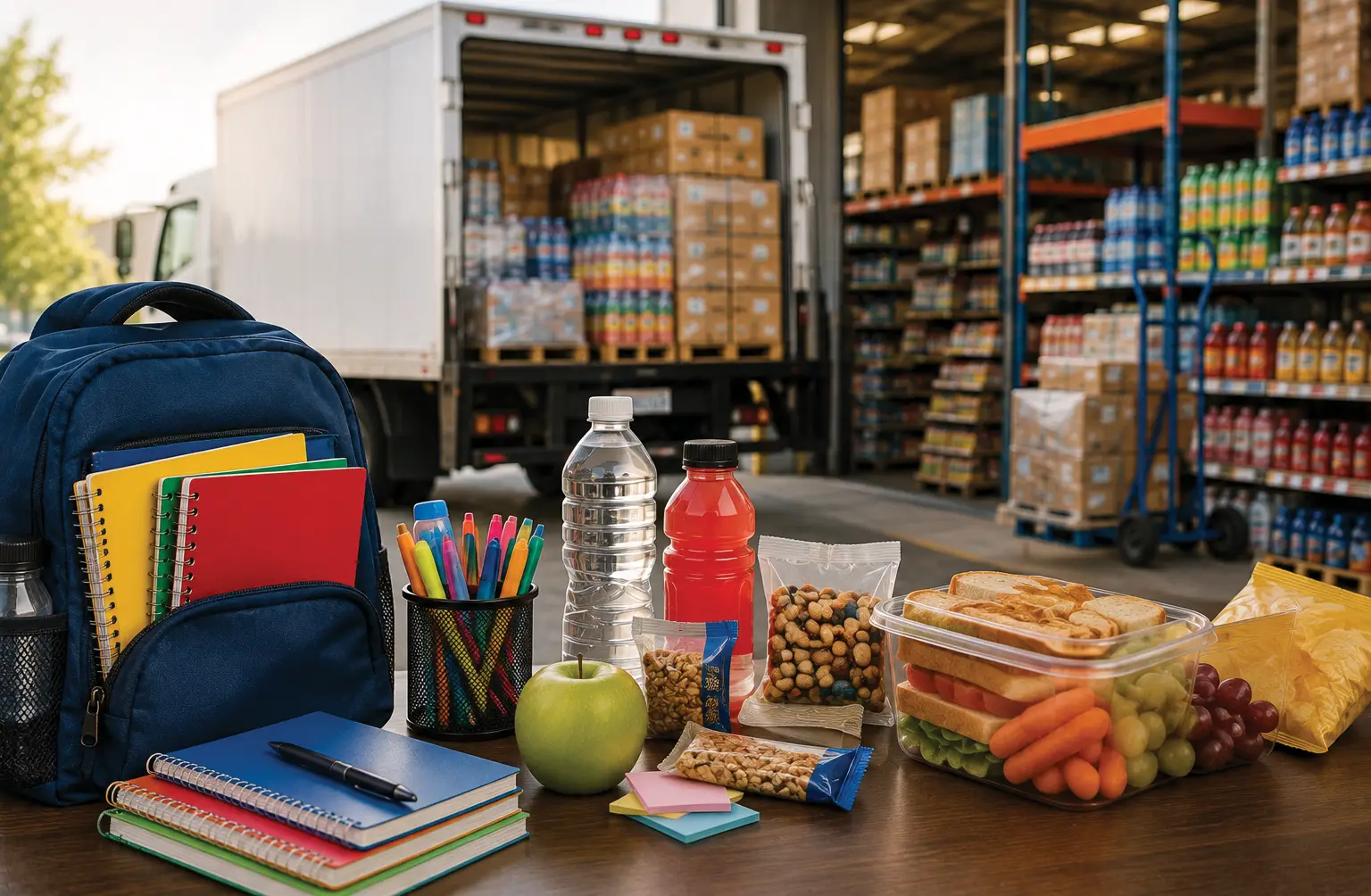
Back-to-school season doesn’t just affect office supply stores and clothing retailers. It also creates important opportunities for convenience stores and the distributors that keep them stocked.
As families return to school routines, commuter traffic increases, after-school activities resume, and consumers look for quick, portable food and beverage options. For convenience store distributors, these changes can quickly shift demand across snacks, beverages, grab-and-go food, and other high-velocity categories.
The challenge is anticipating those changes before retailers begin placing larger or more frequent orders.
By combining better inventory planning, accurate demand forecasting, retailer collaboration, and real-time operational visibility, distributors can prepare for the fall transition while avoiding unnecessary inventory and costly stockouts.
Here’s how.
Why Back-to-School Season Matters for Convenience Distribution
The return to school changes daily routines for millions of families, students, teachers, and commuters.
For convenience retailers, that can mean new purchasing occasions throughout the day, including:
- Morning commutes
- Before-school purchases
- Lunch and meal occasions
- After-school snacks
- Sports and extracurricular activities
- Evening convenience trips
These changing routines create opportunities across multiple product categories.
For distributors, however, increased opportunity also means greater pressure to anticipate which products will move and where demand will emerge.
Convenience Categories to Watch During Back-to-School Season
Different markets and retail locations will experience different demand patterns, but several categories deserve particular attention.
Single-Serve Beverages
Portable beverages remain well suited to busy school and work schedules.
Distributors should monitor categories such as:
- Bottled water
- Sports drinks
- Juice
- Energy drinks
- Ready-to-drink coffee
- Functional beverages
Store location and customer demographics should determine the appropriate product mix.
Grab-and-Go Snacks
Convenience is especially important when consumers return to structured daily schedules.
Potential high-velocity categories include:
- Chips
- Crackers
- Protein snacks
- Snack bars
- Nuts
- Candy
- Packaged baked goods
Tracking SKU-level velocity can help distributors distinguish products experiencing genuine demand growth from slower-moving inventory.
Prepared and Fresh Food
Foodservice continues to become increasingly important to convenience retail.
Back-to-school routines create additional opportunities for:
- Breakfast sandwiches
- Prepared sandwiches
- Fresh snacks
- Packaged meals
- Pizza
- Other grab-and-go food
Fresh products also introduce additional inventory challenges because distributors must balance availability against shelf life and waste.
7 Ways Convenience Distributors Can Prepare for Back-to-School Demand
1. Review Previous Fall Sales Data
Start by examining sales from previous back-to-school periods.
Look for changes in:
- SKU velocity
- Customer order volume
- Product categories
- Delivery frequency
- Geographic demand
Historical data can reveal patterns that aren’t obvious when reviewing company-wide sales totals.
A product that performs exceptionally well near schools or commuter corridors, for example, may behave very differently at stores serving primarily residential areas.
2. Segment Demand by Customer and Location
A single forecast for every retailer is unlikely to capture local demand accurately.
Instead, analyze customers according to characteristics such as:
- Store location
- Historical purchasing patterns
- Product mix
- Sales volume
- Delivery frequency
Customer-level planning helps distributors position inventory where it has the greatest chance of selling.
3. Collaborate With Retailers Before Demand Changes
Retailers often know about local demand drivers before distributors do.
Ask customers about:
- Back-to-school promotions
- New product introductions
- Local school schedules
- Store merchandising changes
- Upcoming community events
This information can improve purchasing and replenishment decisions.
Strong distributor-retailer collaboration turns forecasting into a shared planning process rather than a guessing exercise.
4. Monitor Fast-Moving SKUs More Frequently
Seasonal demand can develop quickly.
Once the back-to-school period begins, distributors should monitor high-velocity products closely.
Pay particular attention to:
- Inventory on hand
- Days of supply
- Fill rate
- Order frequency
- Inventory turnover
Real-time visibility allows managers to respond before a developing shortage becomes a stockout.
5. Avoid Overreacting to Short-Term Demand
Preparing for seasonal demand does not mean filling the warehouse with extra inventory.
Overestimating demand can create:
- Excess carrying costs
- Slow-moving inventory
- Reduced warehouse capacity
- Product expiration
- Margin pressure
The goal should be maintaining the right inventory, not simply more inventory.
Use sales history, current demand, retailer feedback, and inventory velocity together when making purchasing decisions.
6. Prepare Delivery Operations for Changing Order Patterns
Inventory isn’t the only consideration.
Higher order volumes or changing retailer requirements can affect:
- Route capacity
- Driver schedules
- Delivery windows
- Truck utilization
- Stop duration
Review delivery performance before seasonal demand accelerates.
If certain routes are already operating near capacity, even a modest increase in volume could create delays.
7. Use Real-Time Data to Adjust Throughout the Season
No seasonal forecast will be perfect.
That’s why distributors need the ability to adjust as actual demand develops.
Integrated distribution technology can provide visibility across:
- Inventory
- Sales
- Purchasing
- Customer orders
- Delivery operations
- Business reporting
Instead of waiting for weekly or monthly reports, managers can identify changing conditions and respond more quickly.
Back-to-School KPIs Convenience Distributors Should Track
Monitoring a small group of operational metrics can help determine whether seasonal planning is working.
Fill Rate
Are customers receiving the products and quantities they ordered?
A declining fill rate may indicate that demand is exceeding available inventory.
Inventory Turnover
Are seasonal products moving at the expected rate?
Low turnover may signal overbuying or incorrect product allocation.
Stockout Frequency
Which SKUs repeatedly become unavailable?
Recurring stockouts can identify forecasting or replenishment problems.
Forecast Accuracy
How closely did projected demand match actual sales?
Reviewing forecast performance helps improve future seasonal planning.
On-Time Delivery
Are increased volumes affecting delivery performance?
Maintaining inventory availability provides little benefit if orders aren’t reaching customers when expected.
Don’t Forget the Post-Summer Inventory Transition
One of the most important back-to-school strategies happens before the fall demand increase even begins.
Late summer often leaves distributors with seasonal inventory that may begin slowing as consumer behavior changes.
August is therefore an ideal time to review:
- Slow-moving summer SKUs
- Seasonal inventory
- Aging products
- Excess safety stock
- Upcoming fall assortment changes
Reducing unnecessary summer inventory creates warehouse capacity and working capital for products expected to perform during the fall.
This transition is especially important for distributors managing high SKU counts and products with limited shelf lives.
How Distribution Software Supports Seasonal Planning
Back-to-school demand illustrates why disconnected operational data can create problems for distributors.
Sales may indicate one trend while inventory, purchasing, and delivery teams are working from different information.
Integrated distribution software creates a more complete operational picture.
With better visibility, distributors can:
- Monitor inventory movement
- Analyze customer purchasing trends
- Improve replenishment decisions
- Identify fast-moving products
- Track delivery performance
- Respond faster to demand changes
CDR Software provides distribution management solutions designed for the operational requirements of convenience store distributors, helping connect inventory, orders, purchasing, delivery, and business reporting.
From Back-to-School to Fall Planning
Back-to-school season should also serve as an early signal for broader fall demand.
The information distributors collect in August and September can help improve planning for:
- Fall promotions
- Football season
- Halloween
- Thanksgiving
- Holiday inventory
Rather than treating each seasonal event independently, distributors can use each demand cycle to improve the next.
That creates a continuous planning process built around actual customer and inventory data.
Conclusion
Back-to-school season represents more than a short-term sales opportunity for convenience store distributors.
It marks an important transition from summer purchasing patterns into fall consumer routines.
Distributors that monitor SKU velocity, collaborate with retailers, improve inventory visibility, and adjust replenishment based on real-time demand will be better positioned to capture seasonal opportunities without creating unnecessary inventory.
The objective isn’t to predict every order perfectly.
It’s to build an operation that can recognize demand changes early and respond quickly when they happen.
Frequently Asked Questions
How does back-to-school season affect convenience store distribution?
Changing school, work, and commuter routines can affect demand for portable beverages, snacks, prepared foods, and other convenience products. Distributors need to adjust inventory and replenishment plans accordingly.
Which products should distributors monitor during back-to-school season?
Single-serve beverages, snacks, grab-and-go food, and other high-velocity convenience products are important categories to monitor, although demand will vary by customer and location.
How can distributors avoid back-to-school stockouts?
Review historical demand, collaborate with retailers, monitor fast-moving SKUs, maintain accurate inventory data, and adjust replenishment as actual sales develop.
How can distributors prevent excess seasonal inventory?
Avoid relying on seasonal assumptions alone. Combine historical sales, current SKU velocity, customer-level demand, and inventory turnover when making purchasing decisions.
What distribution metrics should be tracked during seasonal demand changes?
Fill rate, inventory turnover, forecast accuracy, stockout frequency, days of supply, and on-time delivery are useful metrics for evaluating seasonal performance.