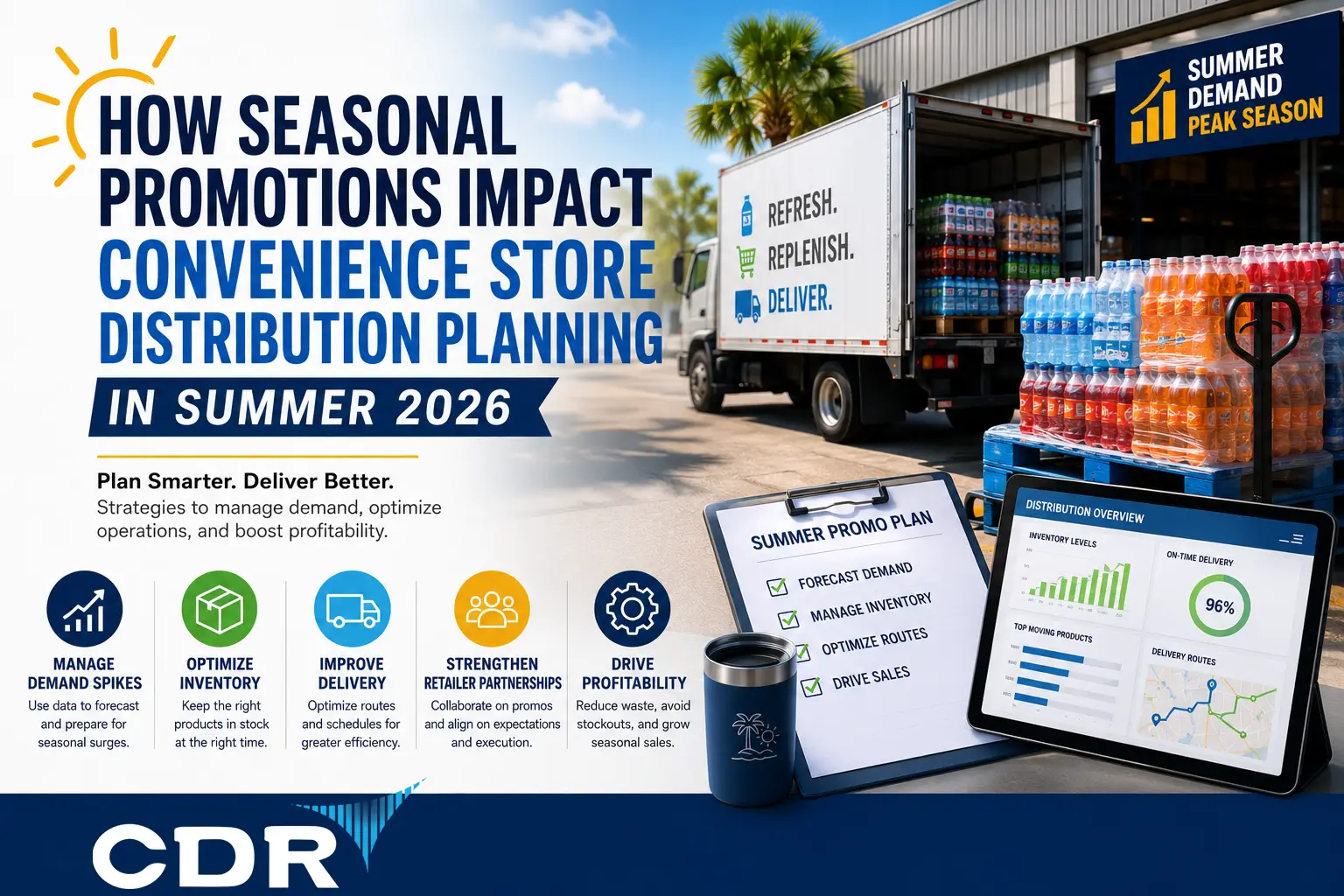
Summer is one of the busiest seasons in convenience store retail. From beverage promotions and travel-related demand spikes to holiday weekends and seasonal product launches, convenience distributors face increased pressure to maintain inventory accuracy and delivery efficiency.
In 2026, successful distributors are not just reacting to seasonal demand. They are proactively aligning inventory, delivery operations, and promotional planning to maximize profitability during peak periods.
This guide explores how seasonal promotions affect convenience store distribution and how distributors can prepare for summer demand shifts more effectively.
Why Summer Promotions Create Distribution Challenges
Summer drives major changes in convenience store purchasing behavior.
Popular seasonal categories include:
- Bottled beverages
- Energy drinks
- Ice and frozen products
- Snacks and impulse purchases
- Outdoor and travel-related items
At the same time, retailers often increase promotions and limited-time offers to drive foot traffic.
For distributors, this creates operational challenges such as:
- Rapid demand fluctuations
- Increased SKU movement
- More frequent deliveries
- Inventory forecasting pressure
Without proper planning, promotions can quickly create stockouts, overstocks, and delivery disruptions.
How Seasonal Promotions Impact Distribution Operations
1. Increased Inventory Volatility
Promotions can dramatically increase sales velocity for certain SKUs.
Distributors must manage:
- Higher replenishment frequency
- Sudden demand spikes
- Inventory allocation across customers
Forecasting becomes more difficult during promotional periods.
2. More Complex Delivery Scheduling
Retailers often require:
- Faster replenishment
- Additional deliveries
- Weekend support during peak periods
This increases route complexity and operational pressure.
3. Greater Risk of Stockouts
High-demand summer products can sell out quickly if inventory visibility is limited.
Stockouts lead to:
- Lost sales opportunities
- Retailer dissatisfaction
- Reduced promotional effectiveness
4. Pressure on Warehouse Operations
Seasonal volume increases create additional strain on:
- Picking operations
- Loading schedules
- Labor resources
Maintaining order accuracy becomes more difficult during peak activity.
7 Best Practices for Managing Seasonal Demand
1. Improve Promotional Forecasting
Historical data should be combined with current market trends to forecast promotional demand more accurately.
Focus on:
- Past summer sales patterns
- Holiday weekend demand
- Retailer promotional calendars
Better forecasting helps reduce inventory imbalances.
2. Increase Real-Time Inventory Visibility
Distributors need immediate insight into inventory movement during promotional periods.
Real-time visibility helps teams:
- Monitor fast-moving SKUs
- Identify low-stock situations quickly
- Reallocate inventory when necessary
3. Prioritize High-Velocity Products
Not all SKUs perform equally during summer promotions.
Distributors should focus operational resources on:
- Top-selling beverage categories
- High-turn impulse items
- Seasonal promotional products
4. Optimize Delivery Routes for Peak Demand
Summer promotions often increase stop frequency and delivery urgency.
Route optimization helps:
- Reduce delivery delays
- Improve driver productivity
- Lower transportation costs
5. Improve Communication with Retailers
Collaboration with retail partners helps distributors prepare more effectively.
This includes:
- Sharing promotional schedules
- Coordinating inventory planning
- Communicating delivery expectations
6. Monitor Inventory Turnover Closely
High summer demand can mask inventory issues if turnover is not tracked carefully.
Key metrics include:
- Inventory turns
- Days of supply
- Sell-through rates
Monitoring these KPIs helps prevent overstocking after promotions end.
7. Use Integrated Distribution Systems
Disconnected systems create delays during high-volume periods.
Integrated distribution software helps connect:
- Inventory management
- Order processing
- Delivery operations
- Accounting and invoicing
This improves visibility and operational coordination.
The Role of Distribution Software During Peak Seasons
Modern distribution software helps convenience distributors respond faster during seasonal demand spikes.
Key capabilities include:
- Real-time inventory tracking
- Automated order processing
- Route optimization
- Delivery visibility
- Reporting and analytics
CDR Software helps convenience distributors improve operational control during peak promotional periods by connecting inventory, delivery, and accounting processes within a unified platform.
How Seasonal Planning Improves Profitability
Distributors that prepare effectively for summer promotions can:
- Reduce stockouts
- Improve retailer satisfaction
- Increase inventory turnover
- Reduce delivery inefficiencies
- Capture more seasonal sales opportunities
Strong seasonal planning directly impacts revenue and margins.
Conclusion
Summer 2026 presents major opportunities for convenience store distributors, but seasonal promotions also create operational complexity.
Distributors that improve forecasting, optimize delivery operations, and maintain real-time visibility will be better positioned to meet demand and maximize profitability.
As seasonal demand continues to evolve, successful distributors will rely on connected systems and data-driven planning to stay competitive.
Frequently Asked Questions
Why are summer promotions important for convenience distributors?
Summer promotions drive significant increases in demand for beverages, snacks, and seasonal products.
What challenges do promotions create?
Promotions increase inventory volatility, delivery complexity, and the risk of stockouts.
How can distributors prepare for seasonal demand?
By improving forecasting, optimizing routes, increasing visibility, and coordinating with retailers.
How does software help during peak seasons?
Distribution software improves inventory tracking, delivery efficiency, and operational visibility.