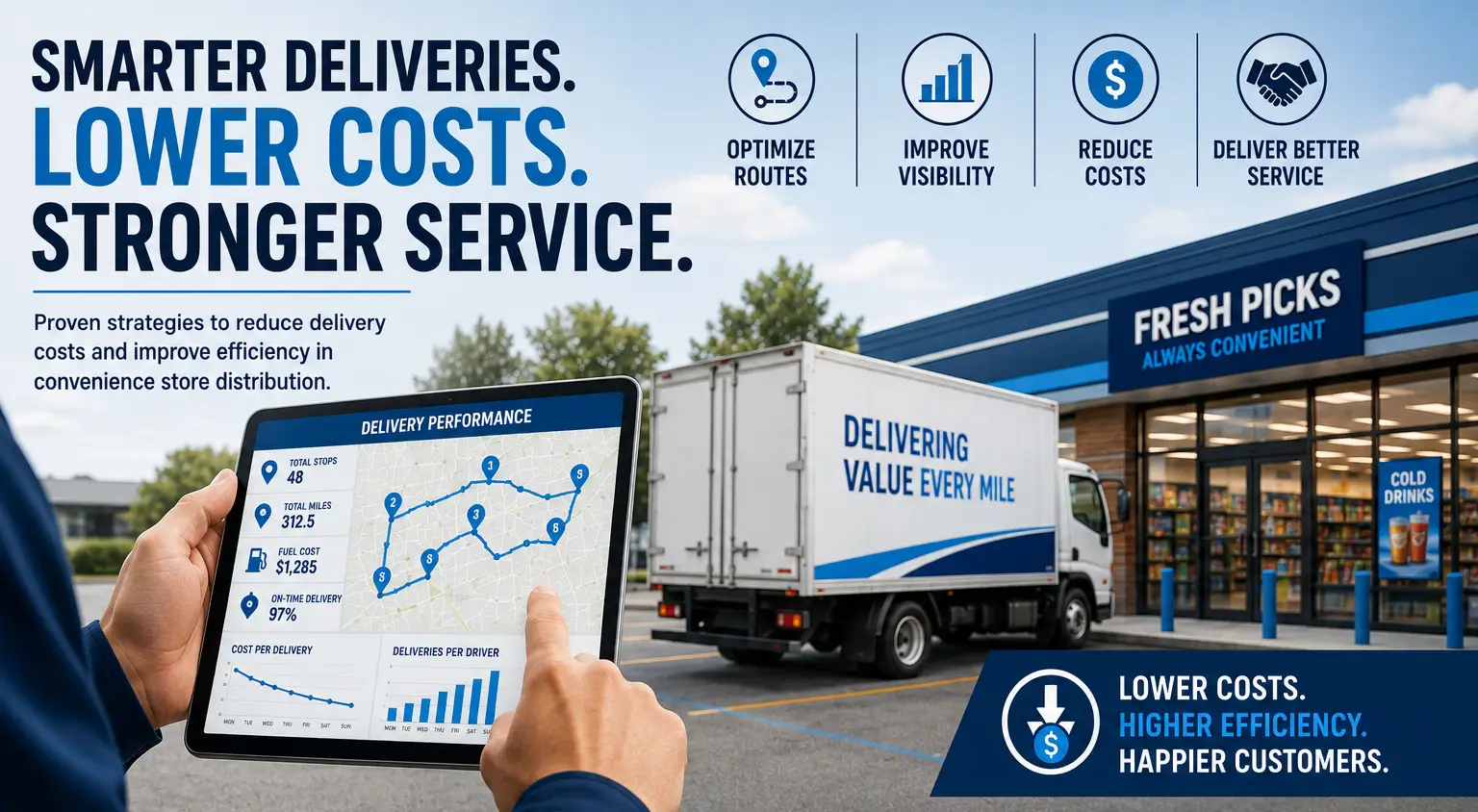
Transportation represents one of the largest operating expenses for convenience store distributors. Rising fuel prices, labor shortages, vehicle maintenance costs, and increasing customer expectations have made delivery efficiency more important than ever.
The challenge is clear: distributors must reduce operating costs without compromising the fast, reliable service retailers depend on.
The good news is that lowering delivery costs doesn’t always require expanding your fleet or reducing service levels. Instead, it often comes down to making smarter operational decisions, improving visibility, and leveraging better technology.
Here’s how convenience store distributors can improve delivery efficiency while continuing to deliver outstanding customer service.
Why Delivery Costs Continue to Rise
Several factors continue to impact distribution operations in 2026:
- Higher fuel costs
- Driver shortages
- Increased maintenance expenses
- Smaller, more frequent retailer orders
- Traffic congestion and longer delivery times
- Rising customer expectations for on-time deliveries
While many of these factors are outside a distributor’s control, operational efficiency is not.
1. Optimize Delivery Routes
One of the fastest ways to reduce transportation costs is through better route planning.
Effective route optimization helps:
- Reduce total miles driven
- Lower fuel consumption
- Improve driver productivity
- Increase daily delivery capacity
- Minimize unnecessary overtime
Modern distribution software helps dispatchers build more efficient routes while adapting to changing delivery schedules.
2. Improve Delivery Visibility
Knowing exactly where deliveries are throughout the day allows managers to respond proactively to delays.
Greater visibility enables distributors to:
- Monitor delivery progress
- Identify bottlenecks
- Communicate accurate ETAs
- Improve customer satisfaction
- Reduce unnecessary customer inquiries
Real-time operational insight creates a better experience for both dispatchers and retailers.
3. Reduce Empty Miles
Empty return trips significantly increase operating expenses.
Strategies to reduce empty miles include:
- Consolidating delivery routes
- Scheduling pickups on return trips
- Balancing delivery territories
- Reviewing stop density regularly
Small improvements across hundreds of weekly deliveries can generate meaningful cost savings.
4. Improve Order Accuracy
Incorrect orders create expensive secondary deliveries.
Improving order accuracy helps eliminate:
- Return trips
- Emergency deliveries
- Customer credits
- Manual corrections
Accurate picking and verification reduce unnecessary transportation expenses while improving customer confidence.
5. Use Delivery Performance Metrics
Successful distributors monitor key transportation KPIs, including:
- Cost per delivery
- Miles per stop
- On-time delivery percentage
- Fuel cost per route
- Deliveries per driver
- Vehicle utilization
Tracking these metrics helps identify opportunities for continuous improvement.
6. Plan Deliveries Around Customer Demand
Not every customer requires the same delivery frequency.
Analyzing purchasing patterns allows distributors to:
- Optimize delivery schedules
- Consolidate shipments
- Reduce unnecessary stops
- Improve truck utilization
Better planning lowers costs while maintaining excellent service.
7. Leverage Integrated Distribution Software
Disconnected systems make transportation management more difficult.
Integrated distribution software connects:
- Sales orders
- Inventory
- Dispatch
- Delivery scheduling
- Customer information
- Operational reporting
With all critical information available in one place, dispatchers can make faster, more informed decisions.
The Business Benefits
Reducing delivery costs creates measurable improvements across the organization.
Benefits include:
- Lower transportation expenses
- Improved fleet utilization
- Higher driver productivity
- Better on-time delivery performance
- Increased customer satisfaction
- Improved operating margins
Perhaps most importantly, greater efficiency allows distributors to scale their operations without proportionally increasing transportation costs.
How CDR Software Helps
CDR Software provides convenience store distributors with integrated distribution management tools that improve operational visibility across inventory, order management, dispatch, and delivery operations.
By bringing critical operational data together, distributors can make smarter routing decisions, improve delivery performance, reduce operating costs, and provide better service to retail customers.
Final Thoughts
Reducing delivery costs isn’t about making fewer deliveries—it’s about making smarter ones.
Distributors that invest in better planning, operational visibility, performance measurement, and integrated technology will be well positioned to control costs while continuing to exceed customer expectations.
In today’s competitive convenience distribution market, operational efficiency is no longer just a cost-saving initiative—it’s a competitive advantage.
Frequently Asked Questions
What is the biggest contributor to delivery costs?
Fuel, labor, vehicle maintenance, and inefficient routing are typically the largest contributors to transportation expenses.
How can distributors improve delivery efficiency?
Optimizing routes, improving order accuracy, increasing delivery visibility, and monitoring transportation KPIs can significantly improve efficiency.
Why is delivery visibility important?
Real-time visibility helps dispatchers identify delays, communicate with customers, and make informed operational decisions.
How does distribution software reduce transportation costs?
Integrated distribution software improves route planning, dispatch visibility, inventory coordination, reporting, and overall operational efficiency.