
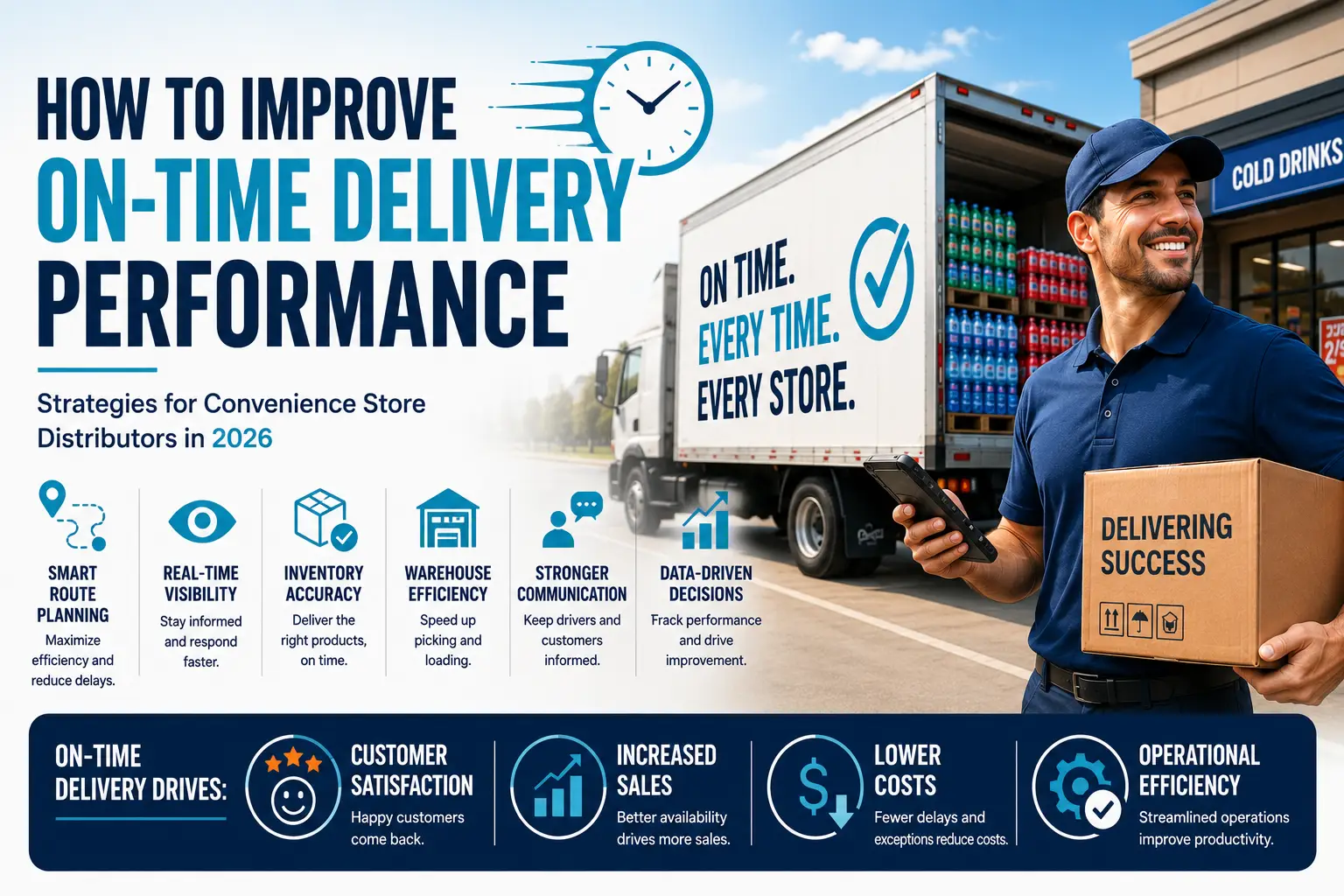
In convenience store distribution, on-time delivery is more than a service metric. It directly impacts customer satisfaction, inventory availability, and profitability.
As retailers face increasing consumer expectations and seasonal demand fluctuations, distributors are under pressure to deliver the right products at the right time, every time.
In 2026, improving delivery performance requires more than efficient routes. It demands better visibility, stronger planning, and integrated operational processes.
This guide explores why on-time delivery matters and how convenience distributors can improve performance across their operations.
Why On-Time Delivery Matters
Convenience stores rely on frequent replenishment to keep shelves stocked with fast-moving products.
Late deliveries can result in:
- Empty shelves
- Lost sales
- Reduced customer satisfaction
- Inventory imbalances
- Increased operational costs
For distributors, delivery performance has become a key competitive differentiator.
Key Factors Affecting Delivery Performance
Route Complexity
Convenience distributors often manage:
- Multiple daily routes
- High stop counts
- Tight delivery windows
Route complexity increases the risk of delays and inefficiencies.
Inventory Availability
Products must be available before they can be delivered.
Inventory shortages can lead to:
- Partial shipments
- Missed deliveries
- Additional transportation costs
Warehouse Efficiency
Slow picking and loading processes can delay deliveries before trucks even leave the facility.
Common issues include:
- Labor shortages
- Picking errors
- Congested loading areas
Seasonal Demand
Summer promotions, holiday weekends, and weather events can create unexpected spikes in order volume.
Without proper planning, delivery schedules can quickly become overwhelmed.
7 Strategies to Improve On-Time Delivery Performance
1. Improve Route Planning
Efficient route planning remains one of the most effective ways to improve delivery performance.
Focus on:
- Reducing unnecessary mileage
- Balancing route workloads
- Adjusting routes based on delivery volume
Better routes improve driver productivity and service consistency.
2. Increase Real-Time Visibility
Real-time visibility allows managers to monitor delivery operations as they happen.
Benefits include:
- Faster issue identification
- Improved communication
- Better decision-making
Visibility helps prevent minor issues from becoming major disruptions.
3. Improve Inventory Accuracy
Inventory inaccuracies often create delivery delays.
Maintaining accurate inventory records helps ensure:
- Orders are fulfilled correctly
- Products are available when needed
- Deliveries remain on schedule
4. Optimize Warehouse Operations
Improving warehouse efficiency can significantly impact delivery performance.
Best practices include:
- Streamlining picking processes
- Reducing loading delays
- Standardizing workflows
Faster warehouse execution supports more reliable delivery schedules.
5. Use Delivery Performance Metrics
Monitoring key performance indicators helps identify opportunities for improvement.
Important KPIs include:
- On-time delivery percentage
- Route completion rates
- Delivery exceptions
- Average stop time
Data-driven improvements create long-term gains.
6. Improve Communication with Retail Customers
Clear communication reduces misunderstandings and improves service.
Retailers should receive timely updates regarding:
- Delivery schedules
- Delays
- Order changes
Transparency helps strengthen customer relationships.
7. Leverage Integrated Distribution Technology
Connected systems help improve delivery performance by providing visibility across operations.
Integrated solutions help connect:
- Inventory management
- Order processing
- Route operations
- Customer service
This improves coordination and operational responsiveness.
Common Causes of Late Deliveries
Understanding root causes helps distributors address problems proactively.
Common causes include:
Inventory Shortages
Products unavailable for shipment create immediate delivery challenges.
Traffic and Transportation Delays
Road conditions and congestion can impact route performance.
Labor Constraints
Staffing shortages in warehouses and transportation departments often affect delivery schedules.
Poor Route Planning
Inefficient routing increases travel time and decreases productivity.
How Technology Supports Delivery Performance
Modern distribution software provides tools that help distributors improve delivery reliability.
Capabilities include:
- Real-time visibility
- Route management
- Inventory tracking
- Reporting and analytics
CDR Software helps convenience distributors streamline operations and improve delivery performance through integrated distribution management solutions designed specifically for the industry.
Measuring Delivery Success
Successful distributors track performance consistently.
Recommended metrics include:
On-Time Delivery Rate
Measures the percentage of deliveries completed within the scheduled window.
Delivery Accuracy
Tracks whether customers receive the correct products and quantities.
Route Efficiency
Measures route productivity and resource utilization.
Customer Satisfaction
Provides insight into service performance from the retailer’s perspective.
Conclusion
In 2026, on-time delivery remains one of the most important factors influencing convenience distribution success.
As customer expectations continue to rise, distributors must focus on visibility, planning, inventory accuracy, and operational efficiency.
Companies that consistently improve delivery performance will strengthen customer relationships, reduce costs, and create a competitive advantage in an increasingly demanding marketplace.
Frequently Asked Questions
Why is on-time delivery important in convenience distribution?
Convenience stores depend on frequent replenishment to maintain product availability and customer satisfaction.
What causes late deliveries?
Common causes include inventory shortages, labor constraints, traffic delays, and inefficient route planning.
How can distributors improve delivery performance?
By improving route planning, increasing visibility, optimizing warehouse operations, and leveraging integrated technology.
What metrics should distributors track?
On-time delivery rates, delivery accuracy, route efficiency, and customer satisfaction are key performance indicators.