
Published: July 21, 2026
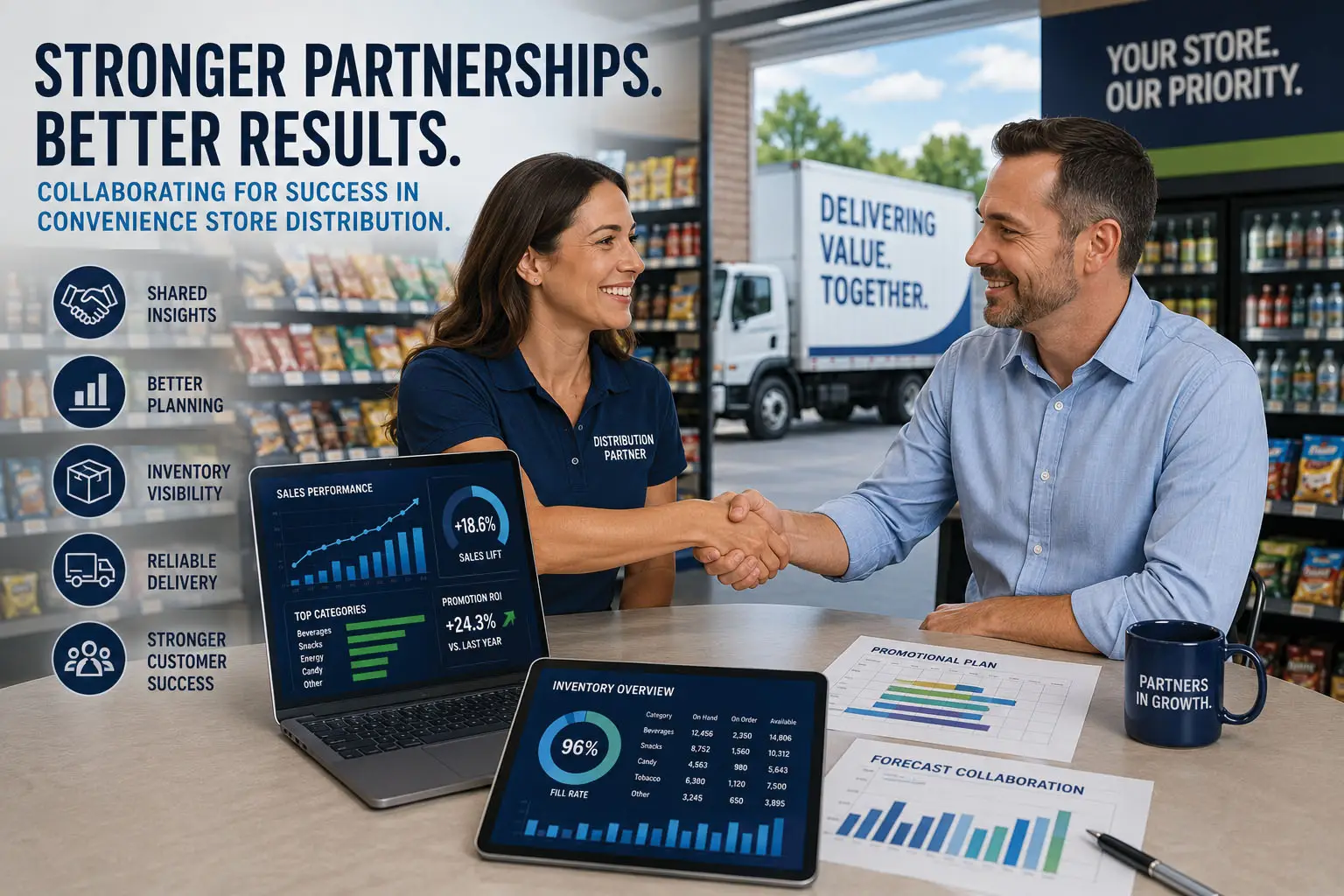
The relationship between convenience store distributors and retailers has evolved significantly over the past decade. Today, success depends on more than simply delivering products on time. Retailers expect distributors to provide insights, improve inventory performance, support promotions, and help maximize sales.
As competition intensifies across convenience retail, stronger collaboration between distributors and retailers is becoming a strategic advantage.
In 2026, companies that share information, plan together, and leverage operational data are better positioned to improve service, reduce costs, and grow profitability for both businesses.
This guide explores why retailer collaboration is becoming one of the most important drivers of success in convenience store distribution.
Why Collaboration Matters
Retailers and distributors share a common goal:
Keeping shelves stocked with the products customers want while minimizing inventory costs.
Achieving this requires better communication and greater operational transparency.
Successful partnerships help both organizations:
- Improve inventory availability
- Reduce stockouts
- Increase promotional success
- Improve customer satisfaction
- Reduce operational waste
When distributors become strategic partners instead of simply product suppliers, everyone benefits.
The Biggest Barriers to Collaboration
Despite shared objectives, many organizations still struggle with disconnected communication.
Common challenges include:
Limited Inventory Visibility
Retailers often lack visibility into incoming inventory and replenishment schedules.
Inconsistent Forecasting
Distributors and retailers may use different assumptions when planning future demand.
Promotional Misalignment
Marketing campaigns frequently launch before adequate inventory is available.
Manual Communication
Emails, spreadsheets, and phone calls often create delays and inconsistent information.
7 Ways to Strengthen Retailer Collaboration
1. Share Demand Forecasts
Collaborative forecasting helps distributors and retailers prepare for:
- Seasonal demand
- Promotions
- Product launches
- Holiday events
Sharing demand expectations improves planning for both organizations.
2. Improve Inventory Visibility
Providing retailers with better inventory information helps them make smarter ordering decisions.
Visibility reduces:
- Emergency orders
- Inventory shortages
- Overstock situations
3. Align Promotional Planning
Promotions succeed when inventory is available.
Distributors should collaborate with retailers on:
- Promotional timing
- Product availability
- Forecasted demand
- Delivery schedules
4. Increase Communication Frequency
Regular business reviews help identify opportunities before they become problems.
Topics may include:
- Inventory performance
- Service levels
- Forecast accuracy
- Upcoming initiatives
5. Use Shared Performance Metrics
Tracking common KPIs creates accountability.
Examples include:
- Fill rate
- On-time delivery
- Inventory turnover
- Forecast accuracy
- Order accuracy
6. Respond Faster to Market Changes
Consumer buying habits change quickly.
Using real-time operational data helps both parties respond more effectively.
Examples include:
- Weather-related demand
- Local events
- New product trends
7. Leverage Integrated Distribution Technology
Technology enables collaboration through:
- Real-time inventory visibility
- Order tracking
- Operational reporting
- Shared analytics
Connected systems reduce manual communication while improving decision-making.
The Business Benefits of Better Collaboration
Distributors that strengthen retailer relationships often experience:
Improved Customer Retention
Retailers value proactive partners who help solve operational challenges.
Better Inventory Performance
Shared planning reduces excess inventory and stockouts.
Stronger Promotional Results
Coordinated execution improves promotional ROI.
Higher Sales Growth
Better product availability leads to increased sell-through.
Increased Operational Efficiency
Fewer surprises result in smoother operations across the supply chain.
How Distribution Software Supports Collaboration
Modern distribution software helps improve collaboration by connecting inventory, orders, delivery operations, and reporting into one platform.
Integrated systems provide:
- Real-time inventory visibility
- Customer-specific reporting
- Order status updates
- Sales analytics
- Performance dashboards
CDR Software helps convenience distributors strengthen retailer relationships by providing integrated distribution management tools that improve communication, operational visibility, and decision-making across the entire distribution process.
Looking Ahead
Retail collaboration will continue to become more important as consumer expectations evolve.
Retailers increasingly expect distributors to provide:
- Business insights
- Inventory recommendations
- Promotional support
- Operational expertise
Distributors that embrace collaborative partnerships will differentiate themselves in an increasingly competitive marketplace.
Conclusion
Convenience store distribution is no longer simply about moving products from warehouse to shelf.
The distributors that thrive in 2026 will be those that become trusted business partners by helping retailers improve inventory performance, execute successful promotions, and respond quickly to changing customer demand.
Better collaboration creates better decisions—and better decisions create stronger results for everyone involved.
Frequently Asked Questions
Why is retailer collaboration important?
Collaboration improves inventory planning, promotional execution, customer service, and operational efficiency.
How can distributors improve retailer relationships?
By sharing forecasts, improving communication, providing inventory visibility, and using shared performance metrics.
What role does technology play?
Integrated distribution software provides real-time information that improves collaboration and decision-making.
What benefits does collaboration provide?
Improved customer retention, stronger sales, reduced inventory issues, better promotions, and increased profitability.