ERP Software for Convenience Distributors
Managing convenience distribution means coordinating thousands of fast-moving SKUs, route delivery, cash & carry operations, and complex reporting requirements, all under constant pressure to execute faster and more accurately.

CDR Software provides ERP and distribution automation software built specifically for convenience distributors. Our platform is designed for wholesalers serving convenience stores, travel centers, and similar high-velocity retail environments.
This is not generic enterprise software adapted for distribution. It is purpose-built for how convenience distributors actually operate.
Who CDR Software Serves
CDR Software is designed for convenience distributors operating in demanding, execution-driven environments, including:
- Route delivery distributors managing driver accountability and delivery execution
- Cash & carry wholesalers operating customer-facing wholesale locations
- Hybrid distribution models combining delivery and cash & carry operations
- Multi-location convenience distributors requiring centralized control with local execution
Our solutions are focused on distribution-driven businesses. They are not designed for retail-only operations, manufacturers without distribution, or eCommerce-first fulfillment models.
Deep Dive into Features:
Order Management for Candy Distributors:
From bulk orders to specific candy varieties, DAC ensures every order is processed efficiently, keeping in mind the unique needs of candy retailers.
Warehouse Management for Confectioneries:
Manage diverse candy products, from chocolates to gummies, with DAC’s warehouse management system, ensuring freshness and timely dispatch.
Purchasing Power for Sweets:
Automate your candy purchasing decisions with DAC. From festive specials to everyday candies, ensure you always stock what’s in demand.
Financial Clarity for Candy Distribution:
Navigate the financial intricacies of the candy distribution industry. From managing vendor relationships to handling retailer payments, DAC simplifies it all. Built for the Realities of Convenience Distribution:
Convenience distributors operate differently than manufacturers, retailers, or traditional warehouses. Success depends on tightly coordinated execution across purchasing, inventory, delivery, and reporting.
Common operation challenges include:
- Managing thousands of fast-moving SKUs with frequent cost and price changes that must flow through the system accurately and immediately
- Supporting route delivery alongside cash & carry operations, where the same inventory may be picked by drivers, warehouse staff, or walk-in customers
- Maintaining inventory accuracy across warehouses, trucks, branches, and customer-facing environments where execution happens in real time
- Executing trade programs and tracking performance across customers, products, and promotions while maintaining visibility for reporting and reconciliation
- Scaling operations without adding manual work or relying on disconnected systems that create data silos and operational friction
Generic ERP systems often struggle in these environments, requiring heavy customization or disconnected add-ons that increase complexity instead of reducing it.
CDR Software is built specifically to support these workflows.
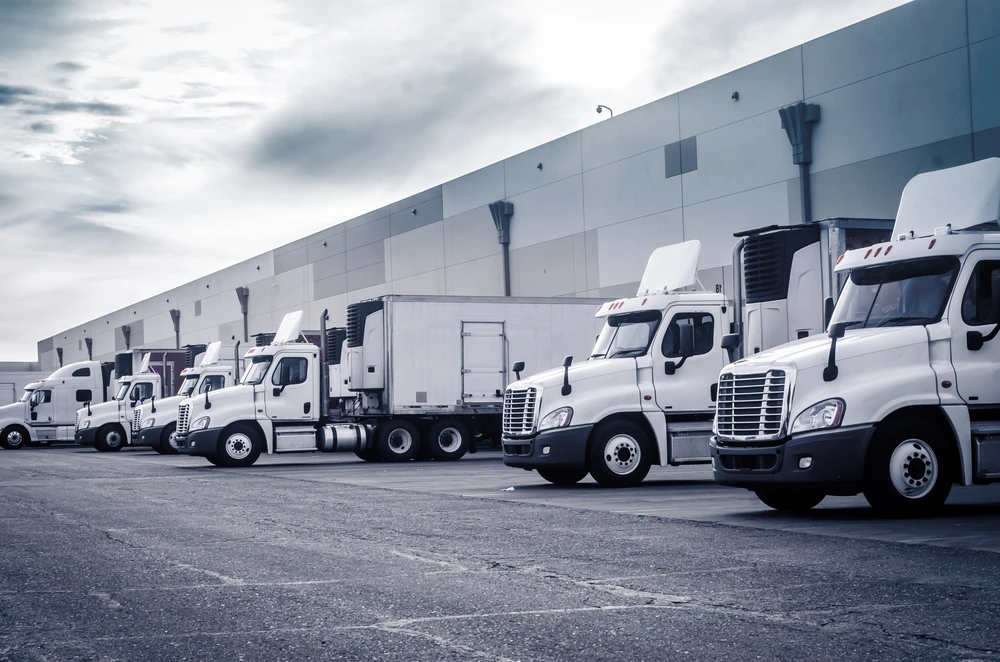
Why Convenience Distributors Choose CDR Software
CDR Software has focused exclusively on distribution for decades, with deep experience supporting convenience distributors across regulated and high-velocity product categories.
Our approach emphasizes clarity, execution, and long-term fit for the industry.
Key advantages include:
- Distribution-first design Built for route delivery, cash & carry, and hybrid models from the ground up, not adapted from manufacturing or retail systems
- Category depth over breadth Deep functionality for tobacco, candy, food & beverage, and other convenience categories rather than shallow coverage across unrelated industries
- Clear product roles ERP, execution, and reporting work together with defined responsibilities and minimal overlap
- Long-term industry focus Solutions that evolve alongside convenience distribution requirements, regulatory changes, and operational realities
This focus helps distributors streamline operations, improve visibility, and scale with confidence.


A Connected Platform for Convenience Distribution
CDR Software delivers a connected ecosystem of solutions, each with a clear role in supporting convenience distribution operations.
DAC ERP
The core ERP system for convenience distributors
DAC ERP serves as the system of record for your business, managing:
- Financials and accounting
- Purchasing and vendor management
- Inventory and pricing
- Customers, routes, and order processing
- Returns, credits, and operational reconciliation
It provides the centralized foundation that supports accurate data, consistent workflows, and operational control across the organization.
SupplyLogic
Distribution execution and automation
SupplyLogic works alongside DAC ERP to support day-to-day execution workflows, including:
- Inventory and order execution processes
- Cash & carry operations
- Warehouse and mobile-adjacent workflows tied directly to ERP data
SupplyLogic extends the ERP into the operational layer, helping teams execute work more efficiently while maintaining data integrity.
VMR Console
Trade program and MULTICAT reporting
VMR Console is designed specifically for tobacco distributors and regulated product environments, providing:
- Trade program visibility
- MULTICAT reporting support
- Structured reporting aligned with distributor requirements
It delivers the reporting clarity needed for regulated categories while remaining connected to the broader ERP ecosystem.
Trusted by Convenience Distributors
CDR Software is actively involved in the convenience distribution industry and works closely with organizations and partners that support distributors nationwide.
Partner with an active participant in industry organizations supporting convenience distributors.

How the Platform Works Together
Each CDR Software product has a defined role, reducing overlap and simplifying system understanding:
- DAC ERP provides the foundation as the system of record, with centralized data and operational control
- SupplyLogic supports execution across warehouse, delivery, and cash & carry workflows
- VMR Console delivers trade program visibility and regulatory reporting for tobacco distributors
Together, these solutions form a cohesive platform built to support the full lifecycle of convenience distribution operations, with a clear hierarchy and purpose for each component.
Convenience Distribution Segments We Support
Convenience distributors often operate across multiple product categories, each with unique operational and regulatory requirements. CDR Software supports a wide range of convenience distribution segments, including:
Tobacco Distribution
MSA reporting, tax compliance, trade program management, and MULTICAT reporting for tobacco distributors navigating complex regulatory environments.
Candy & Confection Distribution
High SKU velocity, seasonal demand management, and promotional execution for candy and confection wholesalers serving convenience retail.
Food & Beverage Distribution
Expiration tracking, lot traceability, temperature control, and compliance support for food and beverage distributors managing perishable and regulated products.
Many convenience distributors also operate cash & carry or hybrid fulfillment models, which are supported through CDR Software’s execution workflows and automation tools.


Implementation, Training, and Ongoing Support
Successful software adoption requires more than features alone. CDR Software provides professional services designed specifically for convenience distributors, including:
- Structured implementation tailored to real distribution workflows
- Training aligned with operational roles across warehouse, delivery, sales, and management teams
- Ongoing support from teams who understand convenience distribution and its day-to-day realities
Our goal is to help distributors adopt confidently and operate effectively from day one.
Ready to See If CDR Is the Right Fit?
CDR Software is built specifically for convenience distributors with complex operational and regulatory requirements. If you’re evaluating ERP options or looking to improve execution across your distribution operation, a short conversation can help determine fit.
Talk with a Convenience Distribution Specialist
Or explore specific solutions:
Frequently Asked Questions
What makes CDR Software different from a general-purpose ERP for convenience distributors?
General-purpose ERP systems are built for broad applicability across industries — which means convenience distributors typically have to customize extensively, work around missing functionality, or maintain separate tools for the things the ERP doesn’t handle well. CDR Software was built exclusively for convenience distribution. The workflows for route delivery, cash-and-carry operations, tobacco compliance, manufacturer reporting, and convenience-specific vendor programs are built in — not configured around a system that was designed for something else. After 40+ years focused on this industry, that depth shows in the details.
We distribute multiple product categories — tobacco, candy, food and beverage. Can CDR handle all of them in one system?
Yes. CDR is built around the multi-category reality of convenience distribution. Most convenience distributors handle several categories simultaneously, each with different regulatory requirements, pricing structures, and vendor programs. DAC manages tobacco tax compliance and MSA reporting, candy and confection inventory with seasonal demand considerations, food and beverage with freshness date tracking, and general convenience merchandise — all within the same platform. You’re not managing separate systems or reconciling data across tools.
Does CDR support both route delivery and cash-and-carry operations?
Yes. CDR supports full-service route delivery distributors, cash-and-carry wholesale warehouse operations, and hybrid models that run both. Route delivery functionality covers driver accountability, delivery execution, electronic signature capture, A/R collections, and returns processing. Cash-and-carry functionality includes point-of-sale for customer-facing warehouse locations. Distributors running both models manage them within the same system.
How does CDR handle the compliance and reporting requirements specific to convenience distribution?
Convenience distribution — particularly tobacco — carries significant compliance and reporting obligations. CDR’s platform includes tobacco tax management by state, county, and city; MSA MULTICAT reporting for tobacco, candy, and other categories; state tax reporting across all states requiring electronic formats; and manufacturer reporting modules for major manufacturers including MSA, PepsiCo-QTG, Swedish Match, and Progressive Group Alliance. These aren’t add-on modules acquired from third parties — they were built as part of the platform for this industry.
What does CDR's platform look like for a distributor that operates multiple locations or branches?
DAC supports multi-location operations with centralized control and local execution. Inventory, pricing, customer accounts, and reporting can be managed across locations within the same system. Warehouse-to-warehouse transfers, multi-warehouse inventory visibility, and consolidated reporting are built into the warehouse management capabilities. For distributors with branches or multiple distribution points, the platform provides the visibility to manage the operation as a whole rather than location by location.
How long has CDR been serving convenience distributors, and what does that experience mean in practice?
CDR has been focused on convenience distribution for over 40 years. That longevity isn’t just a marketing point — it means the system has been shaped by decades of real distributor feedback, regulatory changes, manufacturer program evolutions, and operational shifts in the industry. The support team understands convenience distribution, not just the software. And CDR’s active involvement in industry organizations means the platform continues to evolve alongside the industry rather than playing catch-up.
What does a typical implementation process look like for a convenience distributor switching to CDR?
CDR’s implementation process is structured around distribution workflows rather than generic software deployment. It covers data migration, system configuration, integration with any existing retailer or supplier systems, and training aligned to the operational roles on your team — warehouse staff, drivers, sales reps, buyers, and management each get training relevant to how they’ll use the system. CDR’s professional services team manages the technical side so your team can stay focused on running the business during the transition.