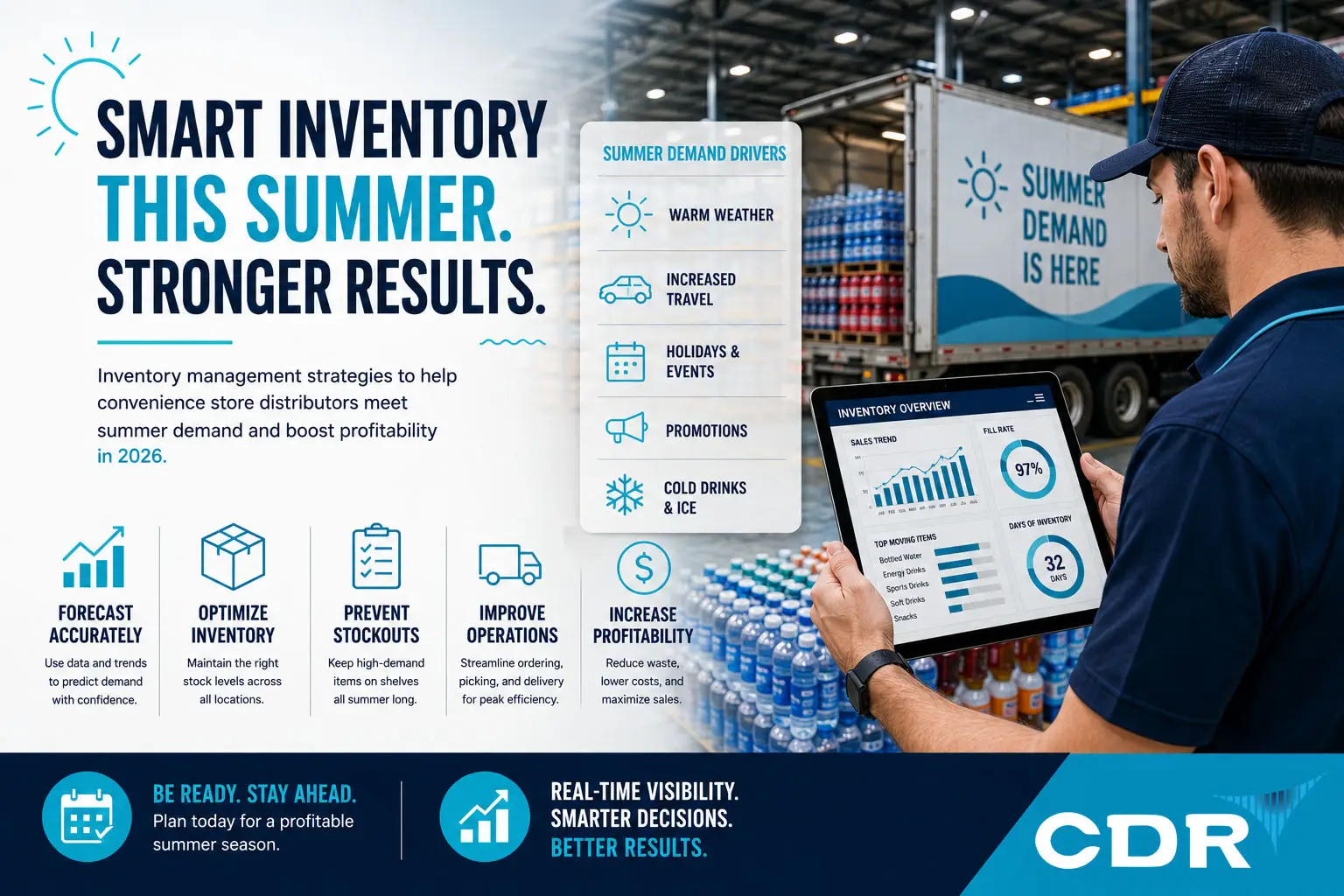
Summer is one of the most important seasons for convenience store distributors. Warmer weather, increased travel, holiday weekends, and seasonal promotions create significant spikes in demand across multiple product categories.
For distributors, these opportunities also bring challenges. Managing inventory effectively during peak season requires accurate forecasting, efficient replenishment, and real-time visibility into stock levels.
In this guide, we’ll explore proven inventory management strategies that help convenience distributors prepare for Summer 2026 and maximize profitability.
Why Summer Creates Unique Inventory Challenges
Summer demand patterns differ significantly from other times of the year.
High-demand categories often include:
- Bottled water
- Sports drinks
- Energy drinks
- Soft drinks
- Ice
- Frozen products
- Grab-and-go snacks
- Outdoor and travel-related items
Demand can fluctuate rapidly due to:
- Weather changes
- Holiday travel
- Local events
- Promotional campaigns
Without proper planning, distributors risk inventory shortages, excess stock, and operational bottlenecks.
The Cost of Poor Summer Inventory Management
Inventory mistakes become more expensive during peak season.
Common consequences include:
Stockouts
When popular items are unavailable, retailers lose sales and customer satisfaction suffers.
Excess Inventory
Overestimating demand can lead to:
- Increased carrying costs
- Reduced cash flow
- Product expiration
- Warehouse congestion
Emergency Replenishment
Last-minute inventory transfers and rush deliveries increase labor and transportation costs.
7 Summer Inventory Management Best Practices
1. Forecast Seasonal Demand Early
Summer planning should begin before demand peaks.
Review:
- Previous summer sales data
- Seasonal trends
- Promotional schedules
- Holiday demand patterns
Historical performance provides valuable insights for forecasting future inventory needs.
2. Monitor High-Velocity SKUs Daily
Certain products can experience dramatic sales increases during summer.
Examples include:
- Bottled water
- Energy drinks
- Ice
- Ready-to-drink beverages
Monitoring these SKUs closely helps prevent stockouts before they occur.
3. Improve Inventory Visibility
Real-time inventory visibility is critical during peak season.
Distributors should be able to quickly answer:
- What inventory is available?
- Which products are moving fastest?
- Where are shortages developing?
Visibility enables faster decision-making and better inventory allocation.
4. Optimize Safety Stock Levels
Safety stock helps protect against unexpected demand spikes.
However, excessive safety stock ties up working capital.
Successful distributors continuously evaluate:
- Lead times
- Demand variability
- Service level requirements
This ensures inventory levels remain balanced.
5. Align Inventory Planning with Promotions
Promotional activity can dramatically impact product demand.
Distributors should work closely with retailers to understand:
- Promotion schedules
- Expected sales increases
- Featured products
Aligning inventory with promotions helps maximize sales opportunities.
6. Improve Inventory Turnover
Inventory turnover is a key performance metric during summer.
Higher turnover generally indicates:
- Better inventory utilization
- Reduced carrying costs
- Improved cash flow
Focus on moving products efficiently while maintaining service levels.
7. Use Integrated Distribution Software
Modern distribution software helps simplify inventory management during peak demand periods.
Benefits include:
- Real-time inventory visibility
- Improved forecasting
- Faster order processing
- Better reporting and analytics
Integrated systems help distributors react quickly to changing conditions.
Key Metrics to Monitor This Summer
Tracking the right KPIs helps distributors identify issues before they impact performance.
Important metrics include:
Inventory Turnover
Measures how efficiently inventory moves through the business.
Fill Rate
Indicates the percentage of customer demand fulfilled without delay.
Days of Inventory on Hand
Shows how long inventory is expected to last.
Stockout Frequency
Tracks how often products become unavailable.
Shrink Percentage
Measures inventory losses from damage, spoilage, or discrepancies.
How Technology Supports Summer Inventory Planning
As inventory complexity grows, manual processes become increasingly difficult to manage.
Technology helps distributors:
- Improve forecasting accuracy
- Monitor inventory in real time
- Automate replenishment decisions
- Analyze demand patterns
CDR Software provides convenience distributors with integrated tools that help improve inventory visibility, streamline operations, and support more effective decision-making during peak seasons.
Preparing for Summer Success
Summer presents significant growth opportunities for convenience store distributors.
Success depends on:
- Accurate forecasting
- Inventory visibility
- Strong retailer collaboration
- Efficient operational execution
Companies that prepare early and leverage data-driven inventory management strategies will be better positioned to capture seasonal demand while maintaining profitability.
Conclusion
Summer 2026 is expected to bring strong demand across many convenience store categories. Distributors that proactively manage inventory will be able to improve service levels, reduce costs, and maximize seasonal revenue opportunities.
By combining forecasting, inventory visibility, and operational efficiency, convenience distributors can navigate seasonal demand with confidence and deliver better results throughout the summer months.
Frequently Asked Questions
Why is summer inventory management important for convenience distributors?
Summer demand often increases significantly for beverages, snacks, and travel-related products, creating additional inventory management challenges.
What products typically experience the biggest summer demand spikes?
Bottled water, sports drinks, energy drinks, ice, frozen products, and grab-and-go snacks are among the most common.
How can distributors reduce summer stockouts?
By improving forecasting, monitoring high-velocity SKUs, and maintaining appropriate safety stock levels.
How does distribution software improve inventory management?
It provides real-time visibility, supports forecasting, and helps streamline inventory planning and replenishment processes.