Convenience store distribution has never been more complex. With growing SKU counts, tighter delivery windows, and rising customer expectations, distributors must operate with speed and precision.
However, many companies still rely on disconnected systems for inventory, orders, delivery, and accounting—creating inefficiencies that impact performance.
In 2026, ERP integration for convenience store distribution is no longer optional. It’s essential for maintaining visibility, improving efficiency, and scaling operations.
In this guide, we’ll explain why ERP integration matters and how it helps distributors stay competitive.
What Is ERP Integration in Distribution?
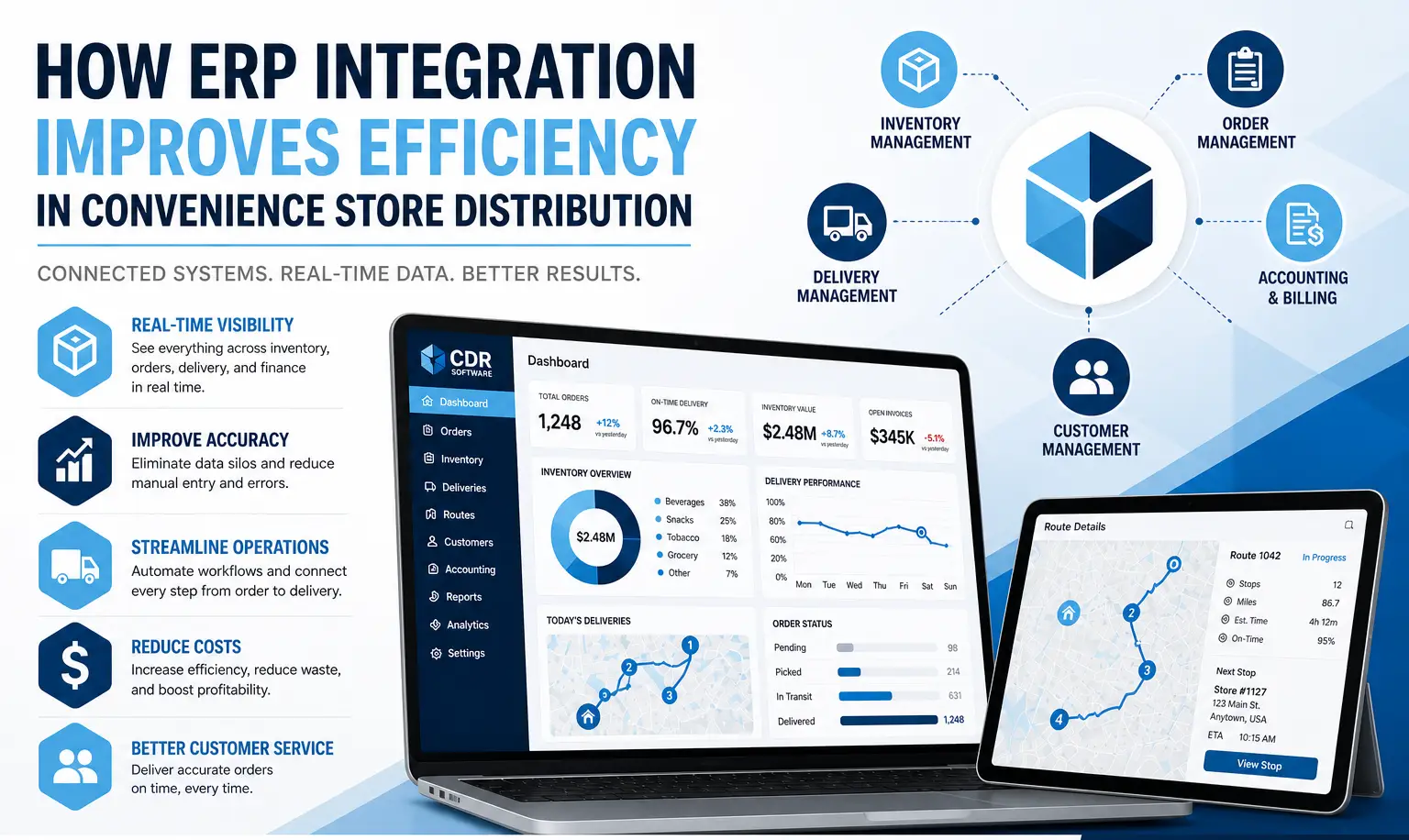
ERP integration connects all core business systems into a unified platform.
For convenience distributors, this means linking:
- Inventory management
- Order processing
- Route delivery operations
- Accounting and billing
- Customer data
Instead of managing separate systems, integrated ERP solutions provide a single source of truth across the organization.
Why Disconnected Systems Create Problems
Many distributors still operate with separate tools for different functions.
This often leads to:
- Data inconsistencies between systems
- Manual data entry and duplicate work
- Delayed reporting and decision-making
- Increased risk of errors
These inefficiencies can slow down operations and reduce profitability.
Key Benefits of ERP Integration
1. Real-Time Data Across Operations
Integrated systems provide immediate access to accurate data.
This allows teams to:
- Track inventory levels
- Monitor order status
- View delivery progress
Real-time visibility improves decision-making.
2. Improved Inventory Accuracy
When inventory systems are connected with sales and delivery, discrepancies are reduced.
Benefits include:
- Fewer stockouts
- Better inventory control
- Reduced shrink
3. Faster Order Processing
Integration eliminates delays between order entry and fulfillment.
Orders flow seamlessly through:
- Sales
- Warehouse
- Delivery
This improves efficiency and reduces errors.
4. Streamlined Delivery Operations
Connecting delivery systems with ERP ensures accurate routing and tracking.
This helps:
- Improve delivery performance
- Reduce delays
- Increase route efficiency
5. Simplified Accounting and Billing
Integrated systems automatically update financial data.
This reduces:
- Manual reconciliation
- Billing errors
- Delayed invoicing
Faster billing improves cash flow.
Common ERP Integration Challenges
Despite the benefits, some distributors face challenges when integrating systems.
These include:
- Legacy systems that are difficult to connect
- Data migration issues
- Lack of internal technical resources
- Resistance to process changes
Successful integration requires proper planning and the right technology partner.
How to Implement ERP Integration Successfully
1. Evaluate Current Systems
Identify gaps between existing tools and determine what needs to be integrated.
2. Choose Industry-Specific Solutions
Convenience distribution has unique requirements.
Choosing software designed for the industry ensures better alignment with operations.
3. Standardize Processes
Consistent workflows make integration smoother and more effective.
4. Ensure Data Accuracy
Clean, accurate data is essential for successful integration.
5. Train Teams for Adoption
Employee adoption is critical to realizing the benefits of integration.
The Role of Distribution ERP Software
Modern distribution ERP systems are designed to support full integration across operations.
They help by:
- Connecting inventory, orders, delivery, and accounting
- Providing real-time visibility
- Automating workflows
- Reducing manual tasks
CDR Software offers an integrated platform built specifically for convenience store distributors, helping businesses streamline operations and improve efficiency.
How ERP Integration Drives Business Growth
Integrated systems do more than improve operations—they support long-term growth.
Benefits include:
- Better scalability as operations expand
- Faster response to market changes
- Improved customer service
- Increased operational efficiency
Companies with integrated systems are better positioned to grow and compete.
Conclusion
In 2026, ERP integration is a critical component of successful convenience store distribution.
Disconnected systems create inefficiencies that limit performance, while integrated platforms provide the visibility and control needed to operate efficiently.
By investing in ERP integration, distributors can reduce errors, improve decision-making, and position their business for future growth.
Frequently Asked Questions
What is ERP integration in distribution?
ERP integration connects different business systems into a single platform for better data visibility and efficiency.
Why is ERP integration important for convenience distributors?
It improves accuracy, reduces manual work, and enables real-time decision-making.
What systems should be integrated?
Inventory, orders, delivery operations, and accounting should all be connected.
How long does ERP integration take?
Implementation timelines vary depending on system complexity and business size.