Master Your
Equipment Lifecycle
With DAC Equipment Manager
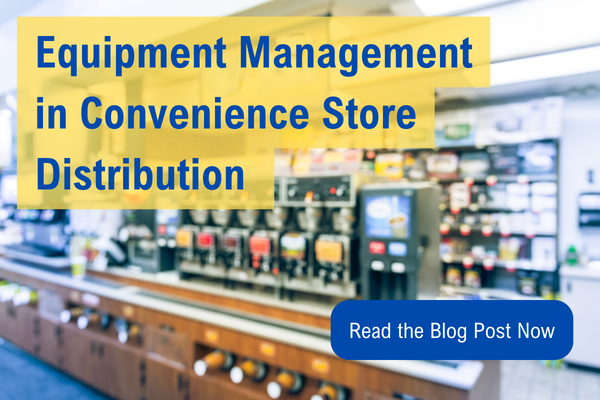
Enhance operational success in convenience store distribution with DAC ERP’s Equipment Manager. Streamline equipment lifecycle management for peak performance, from procurement to end-of-life, ensuring optimal efficacy.
In the ever-evolving landscape of convenience store distribution, the efficient management of equipment stands as a linchpin for operational triumph.
Within this realm, DAC ERP’s Equipment Manager emerges as a stalwart solution, adept at navigating the distinctive hurdles of equipment lifecycle management specific to c-store distribution.
By delving into the intricacies of detailed tracking and management functionalities, this tool guarantees that your equipment consistently upholds peak performance standards, ensuring optimal efficacy from the procurement phase all the way to end-of-life considerations.

Key Features
Lifecycle Tracking
With the DAC Equipment Manager, you can efficiently monitor the status and precise location of every individual piece of equipment at every stage of its lifecycle. This includes tracking its journey from the warehouse to various retailers and back, ensuring a seamless flow of operations.
Such comprehensive visibility is paramount for maintaining optimal control over your valuable assets, guaranteeing they are consistently prepared and operational whenever needed.
Product Association
Our innovative system utilizes intelligent algorithms to seamlessly associate products the equipment uses with corresponding consumables. For instance, it links coffee machines with various coffee blends and condiments.
This meticulous process guarantees that each piece of equipment is fully functional and consistently stocked with essentials, optimizing usability and ensuring high levels of customer satisfaction.
Core Benefits
Reduced Loss and Damage
Effective lifecycle tracking is crucial in minimizing the risk of equipment loss and damage.
Our system offers comprehensive insights into the status and location of each item, allowing you to proactively manage repairs and maintenance tasks with precision.
This proactive approach not only enhances operational efficiency but also minimizes downtime and disruptions, ensuring seamless workflow and optimal equipment performance.
Optimized Inventory and Purchasing
Understanding how equipment is used across different locations is crucial for making well-informed purchasing decisions.
By gaining insights into the specific needs and preferences of various locations, businesses can tailor their procurement strategies to ensure they are effectively meeting the demands.
This detailed understanding enhances inventory management and contributes to the strategic allocation of resources, ultimately maximizing operational efficiency and bolstering long-term sustainability.

Ready to Learn More About DAC’s Equipment Manager?
Discover how DAC Equipment Manager can enhance the efficiency of your convenience distribution business by providing comprehensive control over your equipment lifecycle. Schedule a personalized demonstration today and see how you can streamline your equipment management processes to achieve higher productivity and reduced costs.
Order Management
Every aspect of order management is automated with DAC’s flexible, intuitive functionality. DAC ERP provides a full spectrum of ordering solutions, including in-house order entry, mobile sales with laptops and tablets, web-based customer self-service, and EDI for automated electronic ordering
Warehouse Management
DAC’s warehouse management system provides flexible, real-time control of warehouse operations, enabling distributors to control physical layouts, streamline fulfillments, and increase productivity. Distributors are able to increase service levels while lowering operating costs by utilizing DAC’s foundation for warehousing best practices. Learn more
Purchasing
Distributors achieve optimal inventory levels and superior customer service with DAC’s automated purchasing processes. Buyers can focus on profit-oriented tasks, such as product management, vendor negotiations and inventory strategy.
Learn more
Financial Management
DAC ERP provides a flexible, fully integrated financial suite that adapts to a distributor’s specific business rules, and helps achieve optimal financial management.
Learn more
Business Management
DAC offers extensive, real-time operational reports and views that enable distributors to analyze a variety of business data across company, customer, product and time periods. DAC ERP provides the tools to calculate, track and process all programs related to vendor purchases and customer sales.
Learn more
Services
With a company philosophy that revolves around customer satisfaction, CDR provides a wide range of professional services that help distributors maximize their return on software investment.
Learn more
Testimonials
Testimonials
Nelson Parker, President
Allison Wholesale, Inc. Paint Rock, ALFrequently Asked Questions
What is DAC Equipment Manager and what problem does it solve?
DAC Equipment Manager tracks the lifecycle of convenience store equipment by serial number — from the distributor’s warehouse to retailer locations and back for repairs or end-of-life disposal. In convenience distribution, distributors often provide equipment to retailers as part of their vendor relationships — coolers, coffee machines, display units, and similar items. Without a system for tracking where each piece of equipment is and what condition it’s in, distributors routinely lose visibility into significant asset value. Equipment Manager solves this by maintaining an audit trail for every piece of equipment throughout its lifecycle.
What types of equipment does DAC Equipment Manager track?
Equipment Manager is designed for the types of equipment convenience distributors place with retailers — refrigeration units, beverage dispensers, coffee machines, display racks, and similar items. The system tracks each piece by serial number, recording its status and location as it moves between the warehouse, retailer locations, and repair. It also associates the products a piece of equipment uses with the equipment record — for example, linking a coffee machine to the coffee and condiment products the retailer should be purchasing — which helps distributors verify that equipment placements are generating the expected product sales.
How does Equipment Manager help with purchasing decisions?
By tracking how equipment is distributed across retailer locations and what products each piece of equipment consumes, Equipment Manager gives distributors data to inform purchasing decisions. Understanding which equipment types are most widely deployed, which are aging toward end-of-life, and which retail locations are under-equipped helps buyers and account managers make proactive decisions about equipment investment and replacement rather than reacting to failures or retailer requests.
How does Equipment Manager integrate with the rest of DAC?
Equipment Manager is part of DAC’s Business Management module, so it shares data with the rest of the DAC system. Equipment records are linked to retailer accounts, and product associations tie equipment to the inventory and sales data already in DAC. This means equipment-related insights — like whether a retailer with a coffee machine is purchasing the expected volume of coffee — are available in context with the rest of the account’s activity rather than in a separate tracking system.
Can Equipment Manager help reduce equipment losses?
Yes. One of the primary benefits of serial number-level lifecycle tracking is reducing losses from equipment that leaves the warehouse and isn’t tracked back. Without a formal tracking system, equipment can sit at a closed retailer, be misplaced during a route, or simply not be returned after a placement ends. Equipment Manager’s audit trail creates accountability at each stage — the distributor knows where every piece of equipment should be and when it was last verified at that location.