
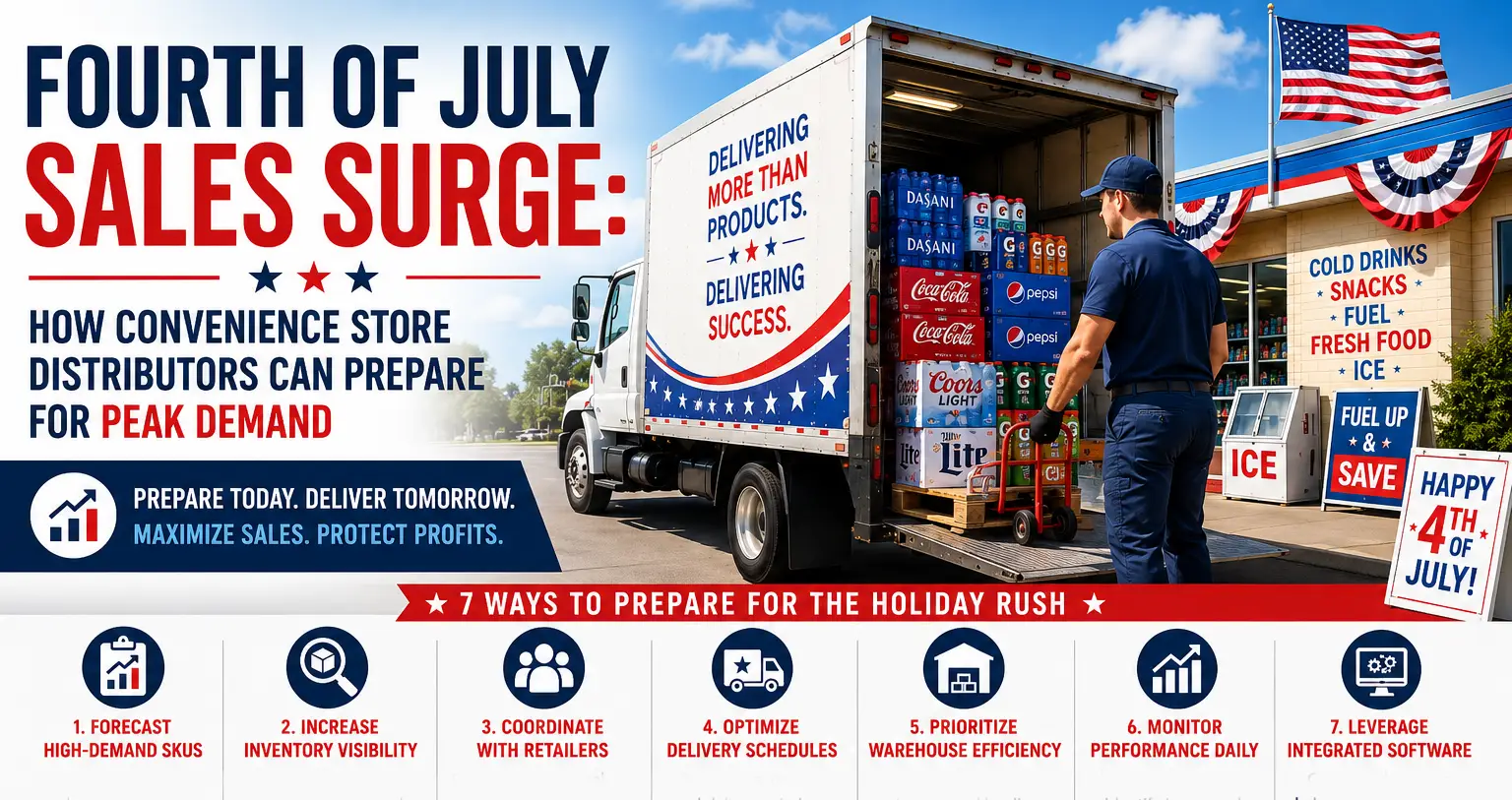
The Fourth of July is one of the busiest periods of the year for convenience retailers. As consumers hit the road, attend backyard gatherings, and stock up for holiday celebrations, demand for beverages, snacks, ice, and grab-and-go items increases dramatically.
For convenience store distributors, this seasonal spike presents an opportunity to grow revenue—but only if operations are prepared.
In this guide, we’ll explore how distributors can prepare for the Independence Day rush and keep inventory flowing while maintaining service levels and profitability.
Why the Fourth of July Matters for Convenience Distribution
The July 4th holiday consistently generates increased sales across several convenience categories.
Products that typically experience the highest demand include:
- Bottled water
- Soft drinks
- Energy drinks
- Beer and malt beverages (where applicable)
- Ice
- Chips and salty snacks
- Candy
- Prepared food
- Hot dogs and buns
- Charcoal and lighter fluid
- Disposable tableware
For distributors, these demand spikes can strain inventory, transportation, and warehouse operations.
The Biggest Challenges During Holiday Demand
Holiday periods compress several days of demand into a much shorter timeframe.
This often creates:
Inventory Pressure
High-volume products move faster than normal, increasing the risk of stockouts.
Delivery Bottlenecks
Retailers often request earlier deliveries before the holiday weekend.
Warehouse Congestion
Higher order volumes increase picking, staging, and loading activity.
Labor Constraints
Vacation schedules and staffing shortages can reduce operational capacity during peak periods.
7 Ways to Prepare for the Holiday Rush
1. Forecast High-Demand SKUs
Use historical July sales data to identify products that consistently experience increased demand.
Monitor:
- Beverage categories
- Ice
- Snack foods
- Promotional items
Early forecasting improves replenishment planning.
2. Increase Inventory Visibility
Real-time inventory visibility allows managers to quickly identify:
- Fast-moving products
- Low-stock situations
- Distribution bottlenecks
Visibility supports faster operational decisions during busy periods.
3. Coordinate with Retail Customers
Communicate with retailers before the holiday regarding:
- Promotional activity
- Delivery expectations
- Inventory requirements
Early collaboration reduces surprises.
4. Optimize Delivery Schedules
Holiday traffic and increased order volume make route planning even more important.
Review:
- Delivery windows
- Stop sequencing
- Driver availability
Efficient scheduling helps maintain on-time delivery performance.
5. Prioritize Warehouse Efficiency
Warehouse productivity directly impacts delivery performance.
Focus on:
- Fast-moving SKU locations
- Efficient staging
- Load verification
- Picking accuracy
Reducing delays inside the warehouse improves outbound execution.
6. Monitor Inventory Turnover Daily
During peak periods, inventory conditions change quickly.
Track:
- Inventory turns
- Fill rates
- Stockouts
- Product availability
Daily monitoring allows proactive adjustments.
7. Leverage Integrated Distribution Software
Connected systems improve coordination between inventory, orders, accounting, and delivery operations.
Integrated distribution software helps distributors:
- Respond faster to demand changes
- Improve operational visibility
- Reduce manual processes
- Support better customer service
Key Performance Metrics to Watch
Successful distributors monitor performance throughout the holiday period.
Recommended KPIs include:
Fill Rate
Measures the percentage of customer demand fulfilled without shortages.
On-Time Delivery
Tracks delivery reliability during high-volume periods.
Inventory Accuracy
Ensures available inventory matches system records.
Order Cycle Time
Measures how quickly customer orders move from entry to delivery.
Inventory Turnover
Evaluates inventory movement during seasonal demand spikes.
How Technology Supports Peak Season Success
Managing holiday demand requires more than additional labor.
Modern distribution software provides:
- Real-time inventory visibility
- Delivery tracking
- Operational reporting
- Inventory forecasting
- Order management
CDR Software helps convenience distributors improve operational efficiency through integrated solutions designed specifically for the unique requirements of convenience distribution.
Looking Beyond the Holiday Weekend
While the Fourth of July creates one of the busiest weekends of the summer, it also provides valuable operational insights.
Analyzing performance after the holiday helps distributors improve:
- Forecast accuracy
- Inventory planning
- Delivery scheduling
- Customer service
These lessons can be applied throughout the remainder of the summer season.
Conclusion
The Fourth of July remains one of the most important sales periods for convenience retailers and distributors alike.
Preparation, visibility, and operational efficiency are the keys to success.
Distributors that improve forecasting, optimize inventory, and streamline delivery operations will be better positioned to capitalize on holiday demand while maintaining exceptional customer service.
Frequently Asked Questions
Why is the Fourth of July important for convenience distributors?
The holiday generates significant increases in beverage, snack, foodservice, and travel-related purchases, creating one of the busiest periods of the summer.
What products experience the highest demand?
Beverages, ice, snacks, prepared foods, and grilling supplies typically experience the largest sales increases.
How can distributors prepare for holiday demand?
Improve forecasting, increase inventory visibility, optimize delivery schedules, and communicate early with retail customers.
How does distribution software help during peak demand?
Integrated software improves inventory visibility, order management, delivery coordination, and operational reporting, allowing distributors to respond more quickly to changing conditions.