
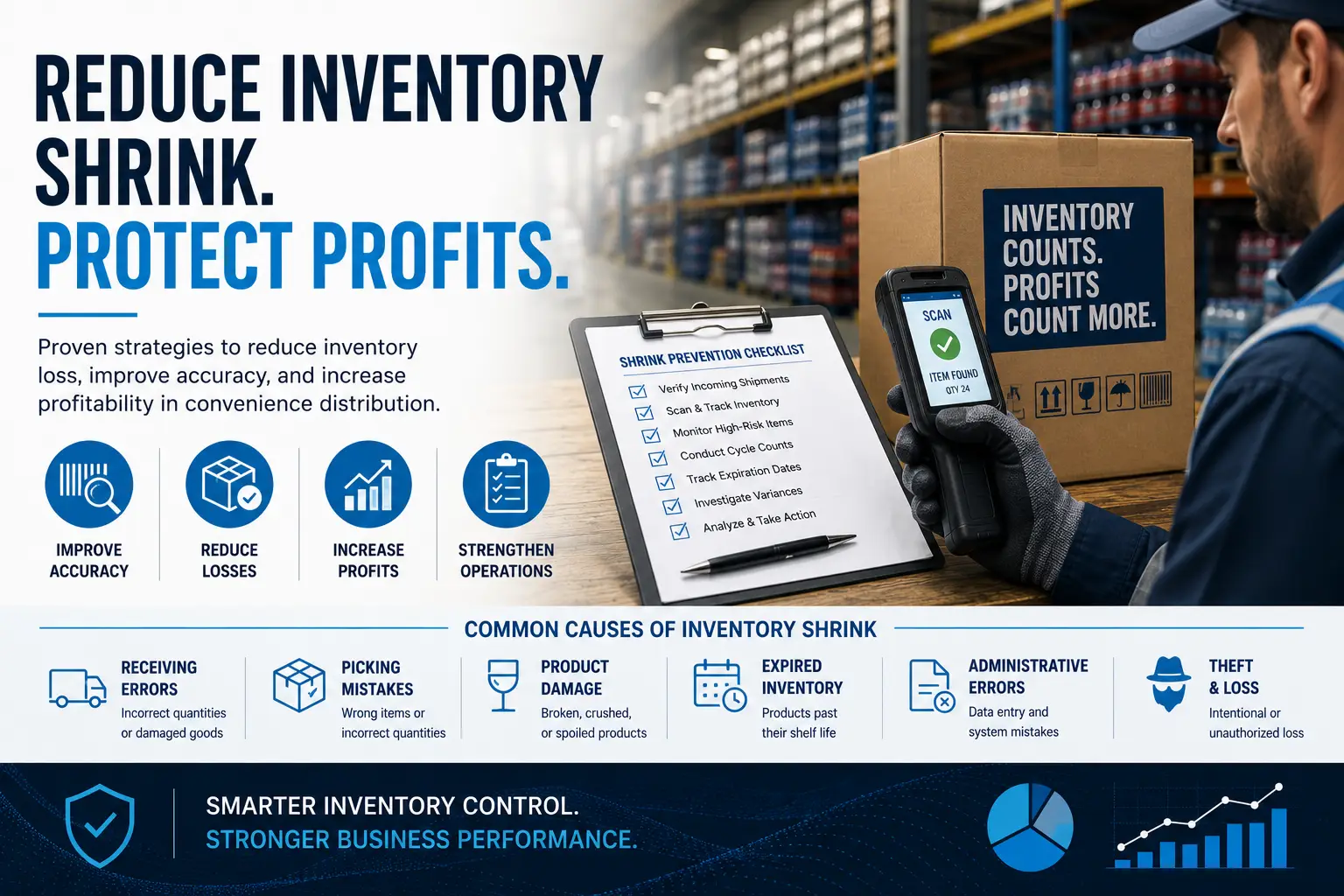
Inventory shrink remains one of the most significant hidden costs in convenience store distribution. While many distributors focus on increasing sales and improving delivery efficiency, inventory losses can quietly erode profitability and impact customer service levels.
In 2026, rising product costs, expanding SKU counts, and labor challenges are making inventory control more important than ever. Distributors that actively manage shrink can improve margins, increase inventory accuracy, and operate more efficiently.
In this guide, we’ll examine the primary causes of inventory shrink and explore proven strategies to reduce losses across convenience distribution operations.
What Is Inventory Shrink?
Inventory shrink occurs when recorded inventory levels differ from actual inventory on hand.
Common causes include:
- Picking and shipping errors
- Receiving discrepancies
- Product damage
- Spoilage and expiration
- Administrative mistakes
- Theft and loss
Even small shrink percentages can create significant financial impacts for distributors handling thousands of SKUs.
Why Inventory Shrink Matters in 2026
Several industry trends are increasing shrink risk:
Growing Product Complexity
Convenience distributors now manage a wider variety of products than ever before, including:
- Fresh food
- Prepared meals
- Energy drinks
- Specialty beverages
- Seasonal products
Additional SKUs increase inventory management complexity.
Higher Product Costs
Inflation and supply chain pressures continue to increase inventory values, making shrink more expensive.
Labor Challenges
Staff shortages and turnover can lead to:
- Increased errors
- Reduced inventory oversight
- Inconsistent processes
The Financial Impact of Inventory Shrink
Shrink affects more than inventory counts.
Consequences include:
Reduced Profit Margins
Lost inventory directly impacts profitability.
Inventory Inaccuracies
Incorrect inventory records create planning and replenishment problems.
Customer Service Issues
Inventory discrepancies can contribute to stockouts and delayed deliveries.
Operational Inefficiencies
Additional time is often required to investigate and correct discrepancies.
Common Sources of Inventory Shrink
1. Receiving Errors
Incorrect quantities received from suppliers can create inventory discrepancies from the start.
Best practice:
- Verify all incoming shipments against purchase orders.
2. Picking Mistakes
Order fulfillment errors remain a major source of shrink.
Examples include:
- Wrong products picked
- Incorrect quantities
- Misidentified SKUs
3. Product Damage
Damage during storage, handling, or transportation can create inventory losses.
High-risk categories often include:
- Beverages
- Glass products
- Perishable goods
4. Expired Inventory
Products that exceed shelf life represent direct inventory loss.
This is particularly important for:
- Fresh food
- Dairy products
- Grab-and-go items
5. Administrative Errors
Manual processes increase the likelihood of:
- Data entry mistakes
- Duplicate transactions
- Inventory adjustment errors
7 Strategies to Reduce Inventory Shrink
1. Improve Inventory Visibility
Real-time inventory visibility helps identify discrepancies quickly and improve accountability.
Benefits include:
- Faster issue resolution
- Better inventory control
- More accurate stock records
2. Conduct Regular Cycle Counts
Cycle counting helps identify problems before they become significant losses.
Best practices:
- Count high-value products frequently
- Investigate recurring discrepancies
- Monitor shrink trends over time
3. Strengthen Receiving Processes
Accurate receiving creates a strong foundation for inventory control.
Implement:
- Shipment verification procedures
- Barcode scanning where possible
- Standardized receiving workflows
4. Monitor High-Risk Products
Certain products are more vulnerable to shrink.
Examples:
- Tobacco products
- Energy drinks
- Fresh food
- Promotional items
Tracking these categories closely can reduce losses.
5. Improve Inventory Rotation
Proper inventory rotation reduces expiration-related shrink.
Use:
- FIFO (First In, First Out)
- Expiration monitoring
- Inventory aging reports
6. Standardize Operational Processes
Consistent procedures reduce opportunities for errors.
Focus on:
- Receiving
- Picking
- Shipping
- Inventory adjustments
7. Leverage Data and Reporting
Reporting tools help identify patterns and root causes.
Track metrics such as:
- Shrink percentage
- Inventory accuracy
- Cycle count variances
- Product loss trends
Data-driven decisions help prevent future losses.
How Technology Supports Shrink Reduction
Modern distribution software helps improve inventory control by providing:
- Real-time inventory visibility
- Automated reporting
- Inventory tracking
- Operational transparency
CDR Software helps convenience distributors improve inventory accuracy and reduce operational inefficiencies through integrated distribution management solutions designed specifically for the industry.
Key Metrics to Track
To evaluate shrink reduction efforts, monitor:
Inventory Accuracy
Measures how closely physical inventory matches system records.
Shrink Percentage
Tracks total inventory loss relative to inventory value.
Cycle Count Variance
Identifies recurring inventory discrepancies.
Product Expiration Loss
Measures losses caused by spoilage and aging inventory.
Conclusion
Inventory shrink remains a significant challenge for convenience store distributors, but it is also one of the most controllable factors affecting profitability.
By improving inventory visibility, strengthening operational processes, and leveraging technology, distributors can reduce losses and improve overall efficiency.
As distribution operations become more complex in 2026, proactive inventory management will continue to play a critical role in maintaining profitability and customer satisfaction.
Frequently Asked Questions
What is inventory shrink in distribution?
Inventory shrink occurs when actual inventory levels are lower than recorded inventory levels due to errors, damage, theft, spoilage, or other causes.
Why is inventory shrink important?
Shrink directly impacts profitability, inventory accuracy, and customer service performance.
How can distributors reduce inventory shrink?
Through improved inventory visibility, cycle counting, inventory rotation, standardized processes, and data-driven reporting.
What products are most vulnerable to shrink?
High-value products, fresh food items, beverages, and promotional inventory are often most susceptible to losses.