
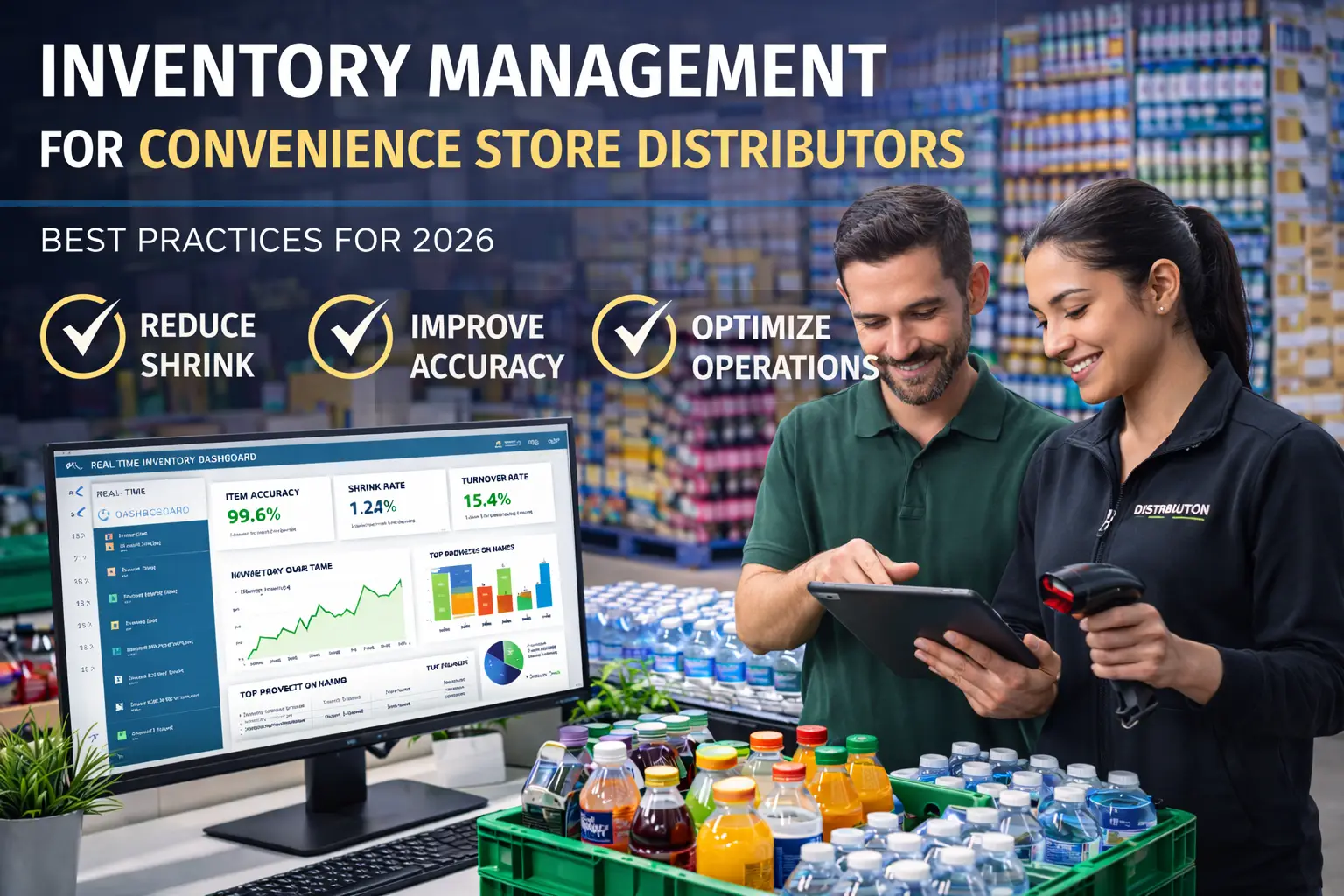
Inventory management is one of the most critical—and challenging—areas of convenience store distribution. With thousands of SKUs, fast-moving products, and frequent deliveries, maintaining accurate inventory levels is essential for profitability and customer satisfaction.
In 2026, effective inventory management for convenience store distributors requires more than manual tracking. Distributors must rely on real-time data, integrated systems, and optimized processes to stay competitive.
This guide covers best practices to improve inventory accuracy, reduce shrink, and optimize operations.
Why Inventory Management Matters in Convenience Distribution
Convenience distributors operate in a high-volume, fast-paced environment where inventory mistakes can quickly impact the bottom line.
Poor inventory management can lead to:
- Stockouts and lost sales
- Excess inventory and wasted capital
- Increased shrink and write-offs
- Delivery errors and customer dissatisfaction
Improving inventory control helps distributors operate more efficiently and maintain strong relationships with retail partners.
Key Inventory Challenges in 2026
1. High SKU Volume
Convenience distributors manage a wide range of products, including beverages, snacks, tobacco, and fresh items.
2. Perishable Inventory
Fresh and foodservice products require careful tracking to prevent spoilage.
3. Frequent Deliveries
Multiple deliveries per week increase complexity in tracking inventory movement.
4. Demand Variability
Seasonal changes and promotions create unpredictable demand patterns.
Addressing these challenges requires better visibility and control across operations.
7 Inventory Management Best Practices
1. Maintain Real-Time Inventory Visibility
Accurate, real-time inventory data is essential.
Distributors should be able to:
- Track inventory levels across locations
- Monitor stock movement
- Identify discrepancies quickly
Real-time visibility helps prevent stockouts and overstocking.
2. Use Barcode Scanning for Accuracy
Manual tracking increases the risk of errors.
Barcode scanning improves accuracy by verifying products during:
- Receiving
- Picking
- Loading
- Delivery
This reduces discrepancies and improves efficiency.
3. Implement Cycle Counting
Instead of relying on annual inventory counts, use cycle counting to maintain accuracy.
Best practices:
- Count high-value items more frequently
- Schedule regular counts
- Investigate discrepancies immediately
This keeps inventory data reliable year-round.
4. Optimize Inventory Levels
Maintaining the right inventory balance is critical.
To optimize levels:
- Analyze sales trends
- Adjust reorder points
- Monitor slow-moving products
This helps reduce excess inventory and improve cash flow.
5. Manage Expiration and Product Rotation
Perishable items require careful monitoring.
Strategies include:
- Tracking product age
- Using FIFO (first in, first out)
- Identifying aging inventory
Proper rotation reduces waste and shrink.
6. Integrate Inventory with Sales and Delivery Operations
Disconnected systems create inefficiencies.
Integration ensures:
- Orders reflect actual inventory levels
- Deliveries are accurate
- Accounting aligns with inventory records
This improves visibility and reduces errors.
7. Use Data Analytics to Improve Performance
Data-driven insights help identify trends and inefficiencies.
Track metrics such as:
- Inventory turnover
- Days of supply
- Stockout frequency
- Shrink percentage
Analyzing this data supports better decision-making.
The Role of Distribution Software in Inventory Management
Modern convenience distribution requires integrated systems that connect inventory with other operations.
Distribution software helps by:
- Providing real-time inventory updates
- Automating inventory tracking and adjustments
- Connecting warehouse, delivery, and accounting processes
- Reducing manual errors
CDR Software helps convenience distributors manage inventory more effectively by providing visibility and control across the entire operation.
How Better Inventory Management Improves Profitability
Effective inventory management delivers measurable benefits:
- Reduced shrink and waste
- Improved product availability
- Lower carrying costs
- Increased operational efficiency
- Better customer satisfaction
These improvements directly impact the bottom line.
Conclusion
In 2026, inventory management is a key driver of success for convenience store distributors. As operations become more complex, relying on manual processes is no longer sustainable.
By implementing best practices such as real-time tracking, cycle counting, and system integration, distributors can improve accuracy and efficiency across their operations.
Distributors that prioritize inventory management will be better positioned to reduce costs, improve service, and grow their business.
Frequently Asked Questions
What is inventory management in convenience distribution?
Inventory management involves tracking, controlling, and optimizing stock levels to ensure accurate and efficient operations.
Why is inventory accuracy important?
It prevents stockouts, reduces shrink, and ensures orders are fulfilled correctly.
How can distributors improve inventory management?
By using real-time tracking, barcode scanning, cycle counting, and integrated systems.
What metrics should distributors track?
Inventory turnover, stockout rates, shrink percentage, and days of supply are key metrics.