
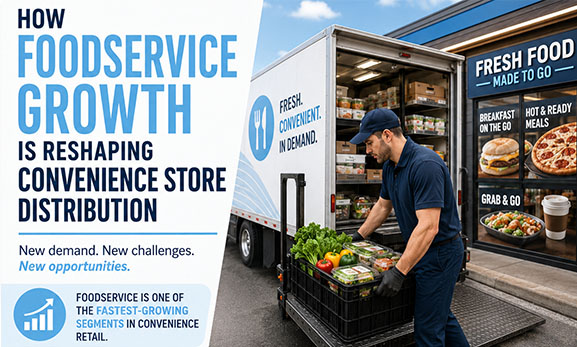
Foodservice continues to be one of the fastest-growing segments in the convenience store industry. What was once a channel focused primarily on fuel, beverages, and packaged snacks has evolved into a destination for fresh meals, prepared foods, and grab-and-go dining options.
For convenience distributors, this shift is creating both opportunities and operational challenges.
In 2026, distributors must adapt to changing inventory requirements, shorter shelf lives, more frequent deliveries, and higher customer expectations. Companies that successfully support foodservice growth can strengthen retailer relationships and unlock new revenue opportunities.
This guide explores how foodservice expansion is reshaping convenience store distribution and what distributors can do to stay ahead.
Why Foodservice Matters More Than Ever
Convenience retailers are increasingly investing in foodservice because it offers:
- Higher profit margins
- Increased customer traffic
- Greater basket sizes
- Enhanced customer loyalty
Consumers now expect convenience stores to provide:
- Fresh sandwiches
- Prepared meals
- Pizza
- Breakfast items
- Hot food programs
- Healthy grab-and-go options
As demand grows, distributors play a critical role in ensuring stores remain stocked with fresh products.
How Foodservice Changes Distribution Operations
Foodservice products create unique distribution requirements compared to traditional convenience items.
Shorter Shelf Lives
Fresh products require tighter inventory controls and faster inventory turnover.
This increases the need for:
- Accurate forecasting
- Frequent replenishment
- Inventory visibility
More Delivery Frequency
Many foodservice programs require:
- Daily deliveries
- Multiple weekly deliveries
- Temperature-controlled handling
This increases route complexity and operational demands.
Expanded SKU Management
Foodservice programs often add dozens or hundreds of new SKUs.
Examples include:
- Fresh ingredients
- Prepared foods
- Packaging materials
- Condiments
- Frozen products
Managing these additional products increases inventory complexity.
Key Challenges Facing Distributors
Inventory Forecasting
Foodservice demand can be highly variable.
Factors influencing demand include:
- Weather
- Promotions
- Local events
- Seasonal travel
Forecasting mistakes can quickly result in spoilage or stockouts.
Product Freshness
Maintaining freshness throughout the supply chain is critical.
Distributors must monitor:
- Product age
- Inventory rotation
- Delivery timing
Delivery Performance
Foodservice programs depend on reliable deliveries.
Late deliveries can disrupt store operations and negatively impact customer satisfaction.
Waste Management
Foodservice products create greater risk of:
- Spoilage
- Expired inventory
- Product shrink
Reducing waste is essential for maintaining profitability.
7 Best Practices for Supporting Foodservice Growth
1. Improve Demand Forecasting
Accurate forecasting helps distributors align inventory levels with demand.
Focus on:
- Historical sales data
- Seasonal trends
- Promotional activity
Improved forecasting reduces waste and stockouts.
2. Increase Inventory Visibility
Real-time visibility helps distributors monitor inventory movement and freshness.
Benefits include:
- Better replenishment decisions
- Faster issue identification
- Improved inventory control
3. Optimize Inventory Rotation
FIFO (First In, First Out) practices become increasingly important with foodservice products.
Effective rotation reduces spoilage and supports freshness.
4. Improve Delivery Scheduling
Foodservice products often require tighter delivery windows.
Optimized schedules help:
- Maintain product quality
- Improve service levels
- Reduce disruptions
5. Monitor Inventory Turnover
High turnover rates generally indicate healthy foodservice inventory performance.
Tracking turnover helps identify:
- Slow-moving products
- Excess inventory
- Potential waste issues
6. Strengthen Retailer Collaboration
Communication with retailers helps distributors better understand:
- Promotional schedules
- Sales trends
- Product preferences
Closer collaboration improves planning accuracy.
7. Use Integrated Distribution Technology
Connected systems improve visibility across:
- Inventory management
- Order processing
- Delivery operations
- Reporting
Integrated technology helps distributors manage complexity more effectively.
The Role of Distribution Software
Modern distribution software helps convenience distributors support foodservice growth by providing:
- Real-time inventory visibility
- Demand forecasting tools
- Delivery management capabilities
- Operational reporting
CDR Software helps convenience distributors improve operational efficiency and inventory control while supporting the evolving needs of foodservice-focused retailers.
Key Metrics to Track
Distributors supporting foodservice programs should monitor:
Inventory Turnover
Measures how efficiently inventory moves through the supply chain.
Fill Rate
Tracks the percentage of customer demand fulfilled without delay.
Product Waste
Measures inventory losses due to spoilage or expiration.
On-Time Delivery
Ensures products arrive when needed to support store operations.
Forecast Accuracy
Evaluates the effectiveness of inventory planning efforts.
Looking Ahead
Foodservice is expected to remain a major growth driver for convenience retail throughout 2026 and beyond.
Distributors that invest in forecasting, inventory visibility, delivery performance, and operational efficiency will be better positioned to support retailer growth and capture emerging opportunities.
The future of convenience distribution is increasingly tied to fresh food, prepared meals, and customer demand for convenience-driven dining experiences.
Conclusion
As foodservice continues to transform convenience retail, distributors must evolve alongside their customers.
Managing fresh inventory, supporting frequent deliveries, and maintaining product quality requires a more agile and data-driven approach to distribution.
Companies that embrace these changes can strengthen retailer relationships, improve profitability, and position themselves for long-term success.
Frequently Asked Questions
Why is foodservice growing in convenience stores?
Foodservice offers higher margins, increased customer traffic, and greater opportunities for differentiation compared to traditional convenience products.
How does foodservice impact distribution?
It creates additional requirements around inventory management, delivery frequency, product freshness, and forecasting accuracy.
What are the biggest challenges for distributors?
Forecasting demand, managing fresh inventory, reducing waste, and maintaining on-time delivery performance.
How can distributors support foodservice growth?
By improving inventory visibility, optimizing deliveries, strengthening forecasting, and leveraging integrated distribution software.