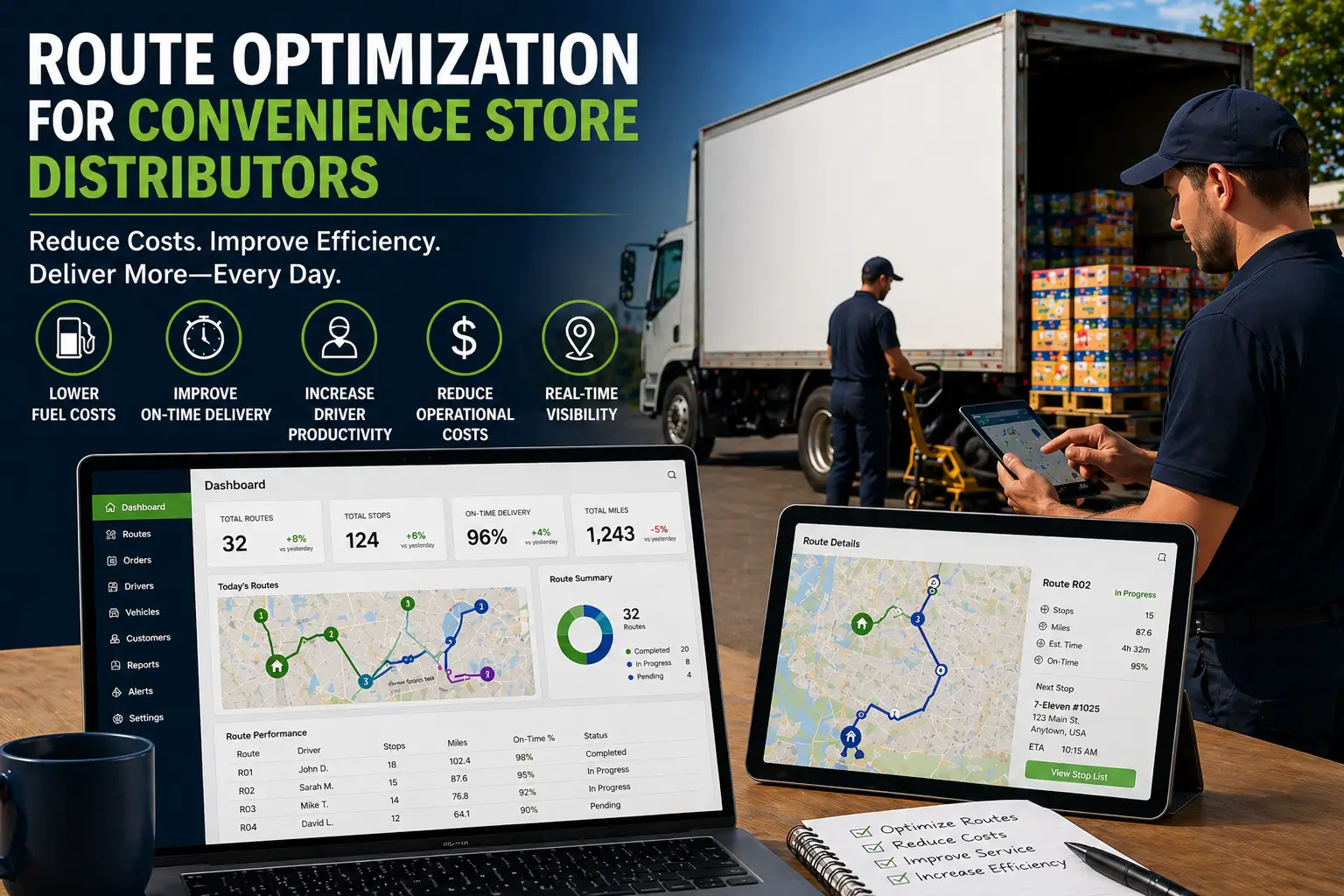
In convenience store distribution, delivery operations are one of the largest cost centers. With rising fuel prices, increased delivery frequency, and tighter margins, distributors must find ways to operate more efficiently.
That’s where route optimization for convenience store distributors becomes essential.
In 2026, optimizing delivery routes is no longer just about saving time—it’s about reducing costs, improving service levels, and maximizing profitability.
This guide explores how route optimization works and how convenience distributors can improve delivery efficiency across their operations.
What Is Route Optimization in Distribution?
Route optimization is the process of determining the most efficient delivery routes based on factors such as:
- Delivery locations
- Order volumes
- Traffic conditions
- Delivery windows
- Driver availability
The goal is to minimize travel time and distance while maximizing delivery efficiency.
Why Route Optimization Matters in 2026
Convenience distribution is becoming more complex due to:
- More frequent deliveries to stores
- Increased SKU variety
- Higher customer expectations for on-time delivery
- Rising transportation and labor costs
Without optimized routes, distributors risk higher operational costs and reduced efficiency.
Key Benefits of Route Optimization
1. Reduced Fuel Costs
Optimized routes reduce unnecessary mileage, lowering fuel consumption and transportation expenses.
2. Improved Driver Productivity
Efficient routes allow drivers to complete more deliveries in less time, increasing route capacity.
3. Better On-Time Delivery Performance
Accurate routing ensures deliveries arrive within scheduled windows, improving customer satisfaction.
4. Lower Operational Costs
Reducing travel time and improving efficiency leads to lower labor and vehicle costs.
5. Increased Route Visibility
Real-time tracking provides insights into delivery progress and helps identify delays.
Common Challenges in Route Planning
Many distributors struggle with:
- Manual route planning
- Static routes that don’t adapt to changing conditions
- Inefficient delivery sequencing
- Limited visibility into route performance
These challenges lead to higher costs and reduced service levels.
7 Ways to Improve Route Optimization in 2026
1. Analyze Delivery Data
Review historical delivery data to identify inefficiencies in routes, delivery times, and stop density.
2. Group Deliveries by Geographic Area
Clustering deliveries by location reduces travel time and improves route efficiency.
3. Balance Workloads Across Routes
Ensure routes are evenly distributed to avoid overloading drivers and underutilizing resources.
4. Adjust Routes Based on Order Volume
Routes should adapt dynamically based on daily order volume and delivery requirements.
5. Minimize Empty Miles
Reduce unnecessary travel by optimizing return routes and avoiding gaps between deliveries.
6. Monitor Real-Time Delivery Performance
Tracking routes in real time helps identify delays and adjust schedules when needed.
7. Continuously Improve with Data Insights
Use performance metrics to refine routes over time.
Track:
- Delivery time per stop
- Route completion times
- Fuel usage
- On-time delivery rates
The Role of Distribution Software in Route Optimization
Modern route optimization requires integrated systems that connect delivery operations with inventory and order data.
Distribution software helps by:
- Providing real-time visibility into routes
- Automating route planning and adjustments
- Reducing manual scheduling
- Improving communication between teams
CDR Software supports convenience distributors by integrating delivery operations with inventory, order management, and accounting systems, enabling more efficient route planning and execution.
How Route Optimization Impacts Profitability
Improving route efficiency delivers measurable financial benefits:
- Lower fuel and transportation costs
- Increased delivery capacity
- Reduced labor expenses
- Improved customer satisfaction
- Faster delivery cycles
Even small improvements in routing can significantly impact overall profitability.
Conclusion
In 2026, route optimization is a critical component of successful convenience store distribution. As operational complexity increases, distributors must rely on data-driven strategies and integrated systems to stay competitive.
By improving route planning, reducing inefficiencies, and leveraging real-time data, distributors can lower costs and improve service levels.
Companies that prioritize route optimization will be better positioned to scale operations and maintain profitability in an increasingly demanding market.
Frequently Asked Questions
What is route optimization in convenience distribution?
Route optimization is the process of planning delivery routes to minimize travel time and costs while maximizing efficiency.
Why is route optimization important?
It reduces fuel costs, improves delivery efficiency, and enhances customer satisfaction.
How can distributors improve route optimization?
By analyzing delivery data, using real-time tracking, and implementing integrated distribution systems.
What role does software play in route optimization?
Software automates route planning, provides visibility, and helps optimize delivery operations.