
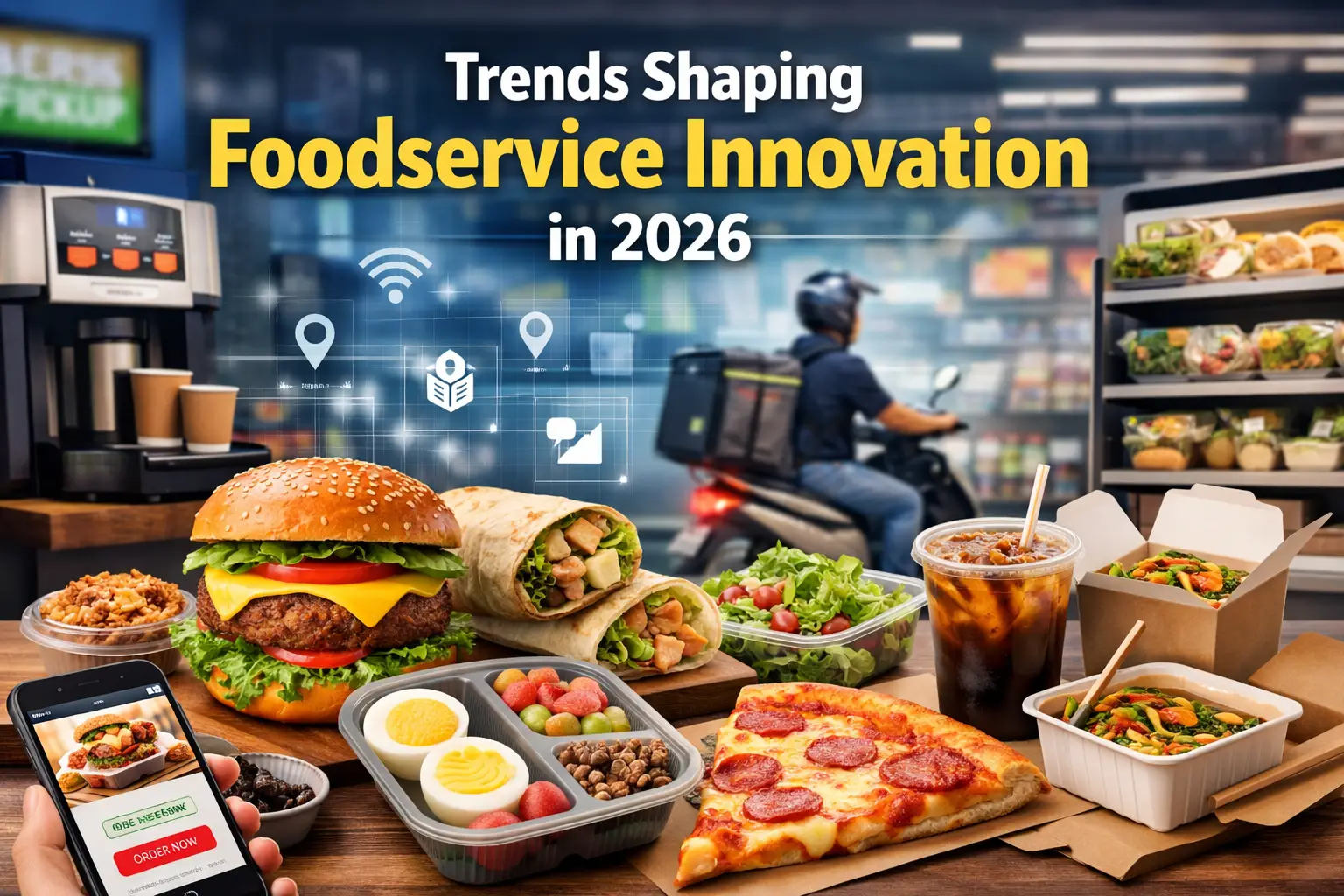
Foodservice Innovation Trends Shaping Convenience Stores in 2026
Foodservice innovation in convenience stores is accelerating as we approach 2026. Shifting consumer expectations, digital transformation, and evolving supply chain capabilities are redefining what successful c-store food programs look like.
What was once limited to roller grills and packaged snacks has evolved into fresh, customizable, technology-driven foodservice experiences. Operators that align menu strategy with logistics, inventory management, and customer data will gain a significant competitive advantage.
Below are the key trends shaping convenience store foodservice in 2026 — and what they mean for supply chain and distribution teams.
1. Health-Conscious and Functional Foods Go Mainstream
By 2026, health-forward offerings will no longer be niche — they will be standard.
Consumers increasingly expect:
-
Plant-based alternatives
-
High-protein snacks and meals
-
Functional beverages
-
Clean-label ingredients
-
Fresh, minimally processed options
For c-store operators, this shift requires:
-
Fresher ingredient sourcing
-
Shorter shelf-life management
-
Enhanced traceability systems
-
Temperature-controlled logistics
Supply chain teams must adapt procurement strategies to handle more perishable items while maintaining food safety compliance and minimizing waste.
Transparency is also becoming essential. Customers want clear labeling around sourcing, sustainability, and nutrition — increasing the importance of robust tracking throughout the distribution network.
2. The Evolution of “Convenience” in C-Store Foodservice
Convenience in 2026 goes beyond speed.
It now includes:
-
Personalization
-
Portability
-
Portion control
-
Customization
-
Digital ordering
Successful convenience store operators are moving toward modular meal components that allow customers to mix and match based on dietary preferences or time constraints.
This shift requires more advanced inventory management systems capable of tracking individual ingredients instead of finished products.
Micro-Fulfillment and Just-in-Time Food Production
To maintain freshness while minimizing waste, many operators are implementing:
-
Micro-fulfillment strategies
-
Centralized commissary production
-
Just-in-time replenishment models
Packaging innovation also plays a key role. Sustainable materials that preserve freshness during transport are becoming critical to both brand positioning and regulatory compliance.
3. Digital Ordering and Delivery Integration
Industry forecasts suggest that by 2026, up to 40% of convenience store food purchases may involve digital interaction.
This includes:
-
Loyalty programs
-
Self-order kiosks
-
Third-party delivery platforms
Digital ordering generates valuable data that influences:
-
Menu development
-
Demand forecasting
-
Promotional planning
-
Inventory optimization
The Rise of Dark Kitchens in C-Stores
Some operators are investing in delivery-only “dark kitchen” models to expand foodservice capacity without expanding retail footprints.
These models require:
-
Specialized inventory prioritization
-
Peak-demand forecasting
-
Ingredient-level demand planning
-
Integrated logistics coordination
Warehouse and distribution teams must adapt to support both in-store and direct-to-consumer fulfillment channels.
Notable Convenience Store Foodservice Leaders
Casey’s: Elevating Core Food Programs
Casey’s continues to expand beyond traditional c-store offerings, with specialty pizzas and premium ingredients driving traffic and loyalty.
Their foodservice strategy includes:
-
Centralized commissary systems
-
Regionally customized menus
-
Temperature-controlled distribution
-
Breakfast and multi-daypart expansion
Their supply chain emphasizes ingredient integrity and consistent product execution across locations.
7-Eleven: Global Inspiration, Local Adaptation
7-Eleven leverages global culinary insights to introduce internationally inspired menu items adapted for local markets.
Key initiatives include:
-
Private-label food programs
-
Heat-and-eat globally influenced meals
-
Predictive analytics for demand forecasting
-
Advanced freshness tracking systems
Their vertically integrated supply chain improves margin control while maintaining quality standards.
{{image_placeholder_2}}
Rutter’s: Regional Differentiation Through Fresh Food
Rutter’s demonstrates how regional c-store chains can compete through chef-designed menus and customization.
Innovations include:
-
Made-to-order kiosks
-
Flexible sourcing strategies
-
Seasonal limited-time offerings
-
Zone-based warehouse picking systems
Their approach highlights the importance of balancing local menu innovation with operational efficiency.
Supply Chain Considerations for Fresh Food Launches
Launching new foodservice programs requires more than menu creativity… it demands supply chain precision.
Managing Perishable Inventory
Fresh ingredients introduce challenges such as:
-
Short shelf life
-
Increased delivery frequency
-
Strict temperature control
-
Cross-contamination prevention
Distribution centers must often reconfigure storage layouts and adopt FEFO (First-Expired-First-Out) inventory protocols instead of traditional FIFO methods.
Flexible and Redundant Sourcing Strategies
Leading operators are developing tiered supplier networks:
-
Primary vendors for staple ingredients
-
Secondary suppliers for contingency
-
Specialty producers for differentiated menu components
Commissary integration within distribution networks reduces in-store labor while ensuring consistency.
Hybrid Delivery Models
Progressive c-store operators are combining:
-
Scheduled staple deliveries
-
On-demand replenishment for perishables
-
Regionally positioned distribution hubs
Advanced route optimization tools now factor in:
-
Delivery windows
-
Temperature requirements
-
Shelf life constraints
-
Fuel efficiency
Synchronizing production schedules with transportation capacity reduces both stockouts and waste.
Technology Driving Foodservice Innovation
Technology is a central driver of foodservice development in convenience stores.
Automation in C-Store Kitchens
Automation addresses labor challenges while improving consistency.
Examples include:
-
Programmable cooking equipment
-
Automated ingredient dispensers
-
Robotic food assembly systems
-
Self-service ordering kiosks
Warehouse operations must align by packaging ingredients to support automated preparation systems.
Real-Time Inventory Visibility
Integrated inventory management systems enable:
-
Consumption-based replenishment
-
POS-integrated forecasting
-
Computer vision restocking alerts
-
RFID ingredient tracking
Real-time visibility reduces shrink, waste, and stockouts while improving freshness management.
Data-Driven Menu Innovation
Advanced analytics platforms help operators:
-
Identify top-performing menu items
-
Track ingredient-level profitability
-
Adjust pricing dynamically
-
Simulate supply chain impact of menu changes
Artificial intelligence is increasingly used to recommend ingredient substitutions based on availability, seasonality, and regional demand.
Best Practices for C-Store Foodservice Success
1. Align Menu Innovation with Customer Insights
Successful operators implement structured voice-of-customer programs using:
-
App feedback
-
In-store surveys
-
Social listening
-
Loyalty data analysis
Customer personas help guide both menu and inventory decisions.
2. Prioritize Staff Training and Quality Control
Foodservice consistency requires:
-
Digital training platforms
-
Standardized preparation procedures
-
Visual preparation guides
-
Regular quality audits
Supply chain teams support quality by ensuring ingredients arrive in optimal condition with clear handling instructions.
3. Strengthen Supplier Collaboration
High-performing operators establish innovation partnerships with suppliers focused on:
-
Waste reduction
-
Ingredient quality
-
Availability metrics
-
Shared performance goals
Cross-functional collaboration between marketing, operations, and supply chain ensures smoother rollouts and better customer outcomes.
Conclusion: The Future of C-Store Foodservice in 2026
Foodservice innovation will define competitive advantage in convenience retail by 2026.
Health-conscious offerings, digital ordering integration, automation, and supply chain optimization are reshaping what customers expect from their local convenience store.
Operators that balance menu creativity with operational excellence — particularly in inventory management, logistics, and technology integration — will transform their stores into true food destinations.
For supply chain professionals, now is the time to build the systems, partnerships, and processes required to support fresh, data-driven, and digitally integrated foodservice programs.
The future of convenience retail is fresh, fast, and intelligently connected.