
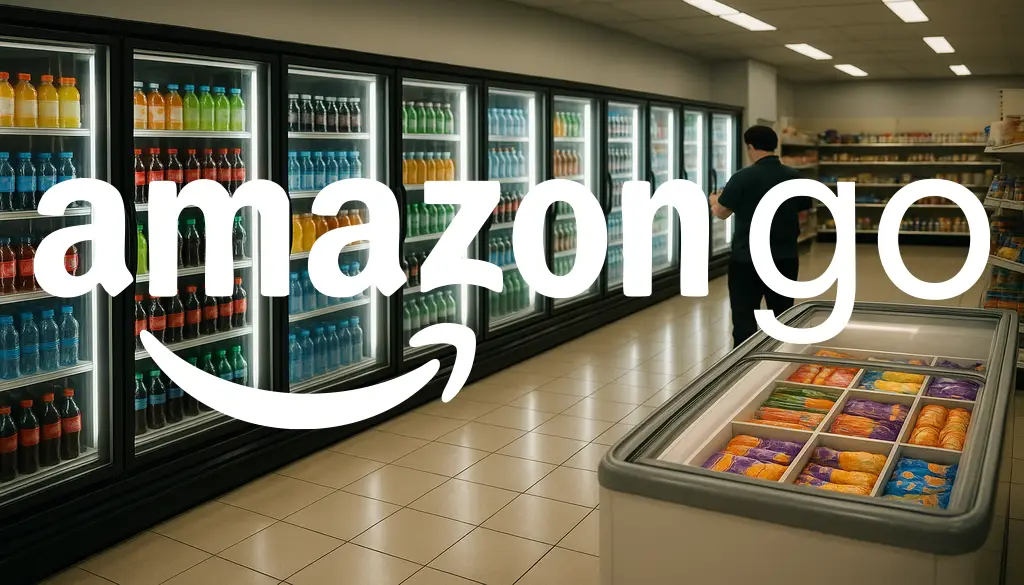
Understanding Amazon Go’s 2018 Launch and Tech-Forward Format
When Amazon Go launched its first store in Seattle in January 2018, it instantly redefined expectations for physical retail. The concept targeted one of retail’s most persistent pain points: the checkout line. Powered by Amazon’s proprietary “Just Walk Out” technology, Amazon Go eliminated traditional cashiers entirely, allowing customers to enter, grab items, and leave without stopping to pay.
At launch, the store combined computer vision, sensor fusion, and deep learning to automatically track shopper behavior and item selection. Hundreds of ceiling-mounted cameras and shelf weight sensors worked together to create a virtual cart for each shopper. Customers scanned a QR code in the Amazon app to enter, linking their physical presence to their Amazon account. Once they exited the store, payment was processed automatically.
This frictionless model positioned Amazon Go as a glimpse into the future of retail automation — and a real-world test case for advanced inventory tracking and data-driven supply chain management.
How Amazon Go’s Technology Changed Retail Operations
From an operational standpoint, Amazon Go functioned as a fully connected retail node within Amazon’s broader ecosystem. Every product movement generated real-time data, providing unprecedented visibility into:
-
Item-level inventory movement
-
Shopper behavior and dwell time
-
Demand patterns by time of day
-
Product pairing and substitution behavior
For supply chain and distribution professionals, this represented a major leap forward. Continuous inventory monitoring enabled real-time stock visibility, more accurate demand forecasting, and reduced shrink and stockouts.
Because checkout labor was eliminated, in-store staff focused on:
-
Restocking shelves
-
Assisting customers
-
Maintaining store readiness
-
Monitoring system performance
In theory, this labor reallocation promised higher productivity — a concept closely watched by warehouse and logistics leaders exploring automation at scale.
Early Consumer Adoption and Format Positioning
Amazon Go stores were designed specifically for urban, time-constrained shoppers. The small-format footprint (typically 1,500–3,000 square feet) focused on grab-and-go meals, snacks, and limited grocery essentials.
Initial demand was driven by novelty, with long lines forming simply to experience cashierless shopping. Average trip times reportedly stayed under ten minutes, reinforcing Amazon Go’s positioning as a convenience-first retail format, not a full grocery replacement.
This tight alignment between merchandise mix, customer expectations, and technology capability was one of the format’s early strengths.
Why Amazon Began Shutting Down Amazon Go Locations
Despite positive customer reception, Amazon ultimately determined that the Amazon Go format was difficult to scale profitably.
1. High Technology Costs
Each store required significant upfront investment in:
-
Camera arrays
-
Sensor-equipped shelving
-
Edge computing infrastructure
-
Ongoing system calibration and monitoring
To justify these costs, Amazon Go locations needed to generate far higher sales per square foot than traditional convenience stores — a threshold that became harder to meet over time.
2. Pandemic-Driven Foot Traffic Declines
The COVID-19 pandemic sharply reduced traffic in urban business districts, where most Amazon Go stores were located. The format depended on frequent, small-basket purchases from office workers, a behavior pattern that never fully recovered.
3. Operational Complexity at Scale
While the technology worked well in controlled environments, accuracy and maintenance became more challenging in busier stores with unpredictable shopper behavior. Each location required specialized oversight, driving higher ongoing operational costs than conventional retail formats.
4. Strategic Shift Toward Larger Store Formats
As Amazon expanded Amazon Fresh and further integrated Whole Foods, leadership began prioritizing store formats with broader assortment, higher basket sizes, and clearer long-term economics. Rather than abandoning the technology entirely, Amazon pivoted toward embedding “Just Walk Out” capabilities selectively within more traditional store environments.
| Format | Size | SKU Count | Core Value Proposition |
|---|---|---|---|
| Amazon Go | 1,500–3,000 sq ft | 500–1,500 | Ultra-fast, checkout-free convenience |
| Amazon Fresh | 25,000–45,000 sq ft | 15,000–20,000 | Full grocery + selective automation |
| Traditional Grocery | 40,000–60,000 sq ft | 30,000+ | Selection, price, familiarity |
From a supply chain perspective, the differences are even more pronounced:
-
Amazon Go required frequent, small deliveries with minimal backroom storage and near-perfect demand forecasting.
-
Traditional grocery relies on established replenishment cycles, promotions, and larger safety stock.
-
Amazon Fresh operates as a hybrid, supporting both in-store shopping and online order fulfillment from the same location.
This comparison highlights a critical lesson: automation strategy must match store economics and fulfillment models.
Key Lessons for Warehouse Management and Supply Chain Leaders
Amazon Go offers several high-impact lessons for logistics, warehouse, and distribution operations:
Automation Must Be Right-Sized
Highly automated systems deliver value only when aligned with transaction volume and revenue potential. Over-automation in low-margin environments can quickly erode ROI.
Real-Time Visibility Is the Real Breakthrough
The most transferable innovation from Amazon Go is continuous, item-level inventory tracking. Similar technologies are now being deployed in warehouses for:
-
Cycle counting
-
Shrink detection
-
Predictive replenishment
-
Exception management
Technology Should Solve Specific Problems
Amazon Go reinforces a core principle: successful innovation addresses clear operational pain points rather than attempting to reinvent entire business models at once.
What’s Next for Tech-Forward Grocery Retail?
The pullback from Amazon Go doesn’t signal the end of cashierless or automated retail — it signals a shift toward pragmatic integration.
Industry trends point toward:
-
Scan-and-go checkout options
-
Smart carts for small baskets
-
Computer vision for shelf auditing
-
Back-of-house automation and micro-fulfillment
Rather than forcing customers into new behaviors, retailers are focusing on removing friction from existing shopping patterns while improving operational efficiency behind the scenes.
For supply chain teams, the biggest gains continue to come from:
-
Unified inventory visibility
-
Cross-channel data integration
-
Automation that enhances — not replaces — human decision-making
Conclusion: Amazon Go’s Lasting Impact on Supply Chain Innovation
Amazon Go may not have scaled as a standalone retail format, but its influence on retail automation and supply chain strategy is undeniable. It accelerated industry adoption of computer vision, real-time inventory tracking, and data-driven decision-making across physical retail and logistics operations.
For warehouse and distribution leaders, the takeaway is clear: technology must deliver measurable operational value, not just innovation headlines. The future belongs to organizations that adopt advanced systems thoughtfully, validate ROI early, and retain the flexibility to adapt as conditions change.
Amazon Go wasn’t a failure — it was a large-scale pilot that reshaped how the industry thinks about automation, data, and the economics of innovation.